
In the world of independent horror, some of the most unsettling stories emerge from personal experiences. Filmmaker Robert Flowers took inspiration from a real-life moment of desperation—selling his plasma for cash—to craft Blood Money, a harrowing tale that blurs the lines between financial struggle and body horror. By weaving in themes of corporate exploitation and personal sacrifice, Flowers delivers a chilling vision of a world where survival comes at the ultimate cost. In this interview, he shares insights into the film’s origins, production challenges, and his growing fascination with horror storytelling.
The Real-Life Inspiration Behind Blood Money
Blood Money was born from a personal experience—one that left a lasting impression on me. At a time when I really needed money, I walked into a blood center to sell my plasma, much like Kenneth, the protagonist of the film. The entire setting felt surreal: a large room filled with people casually sitting at machines, their blood being drawn, filtered, and returned to their bodies, all while they read books or listened to music as if it were just another day.
The staff at the center noticed I was a big guy, and they must have adjusted the machine accordingly. After a few minutes, I felt like my life force was draining away. My vision started to fade, and I had to call for help. Luckily, they shut off the machine, and I recovered quickly. For my trouble, I was paid seventy-five dollars.
That moment sparked the idea—selling your blood for money. But what’s really happening is that you’re trading your life for cash. In many ways, that’s what modern society does. I took that concept and twisted it, transforming it into a corporate medical horror where the real monster isn’t supernatural—it’s a company luring desperate people into sacrificing themselves for a paycheck.
Merging Personal Struggles with Horror Elements
Kenneth clings to the idea of his marriage as his one source of hope—the thing that gets him through each day. The more he relies on it, the more painful it becomes when reality sets in. His relationship serves as his justification for selling his blood, but his battle goes far beyond that. The tension between his personal struggles and the horror of his situation adds emotional depth to the film, making his choices feel even more desperate and unsettling.

The Challenges of Indie Horror Filmmaking
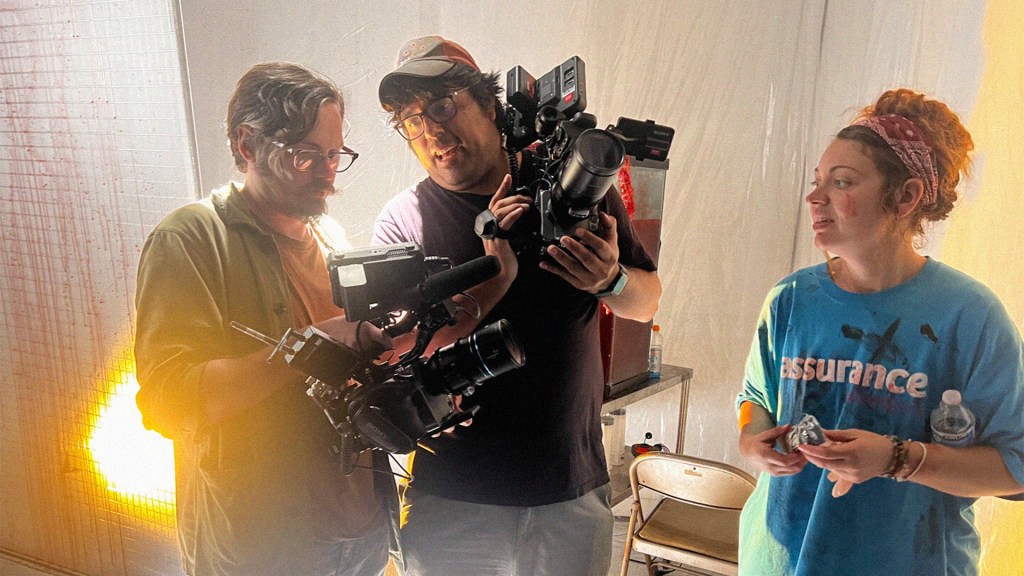
Like most independent productions, our biggest challenges stemmed from trying to achieve a lot with limited resources. One major issue was working with fake blood—resetting scenes, finding locations that would allow us to use it, and even figuring out how to dispose of it afterward. Fake blood stains everything, and we learned the hard way that cleanup is no easy task.
The biggest hurdle, however, was the final scene. We initially shot it one way, but when we got to the editing phase, it just didn’t work. We had spent so much time on it, but in the end, we had to fall back on an alternative idea that I had considered during pre-production. Fortunately, it turned out to be the right choice.

Blood Money and the Appeal of Genre Storytelling
Blood Money was one of my first ventures into horror—specifically, weird horror. It was a major learning experience that helped me get comfortable in the genre. Looking back, I see it as my first step into a much larger world.
I’ve always been drawn to horror and sci-fi films, growing up on classics like Alien and A Nightmare on Elm Street. Genre storytelling allows you to explore deep themes in a creative and engaging way, taking ideas as far as you want. What I’ve learned is that horror gives you the freedom to push boundaries while still delivering a compelling story. Maybe next time, instead of just leaning into horror, I’ll take a full dive.
Blood as More Than Just a Physical Element
In Blood Money, blood isn’t just a bodily fluid—it’s currency. It’s something to be traded, sold, and exploited. My interpretation in the film is that blood functions as a financial instrument, a literal representation of what people are willing to give up in order to survive. This theme resonates beyond the screen, reflecting the real-world desperation that many people face.

Expanding Blood Money into a Feature
When I first finished Blood Money, I didn’t think of it as a feature-length film. But after so many people asked me about it, I started to see the potential. With what I’ve learned since, I could expand the story into something even more intense, with more body horror and deeper psychological elements. In fact, working on this film has inspired me to explore more body horror and medical horror concepts. I recently finished a short story that delves into full-blown body horror, all thanks to what I learned from Blood Money.
Where to Find More from Robert Flowers
Right now, I share all my filmmaking updates on Instagram. You can find me at @RobertFlowersTV. I have a short film in post-production and I’m currently developing a low-budget paranormal horror film, which I’ll be sharing updates on soon. I also plan to launch a YouTube channel in the near future—so keep an eye out for that!
 sinisterfilmfest.com
Leave a comment