
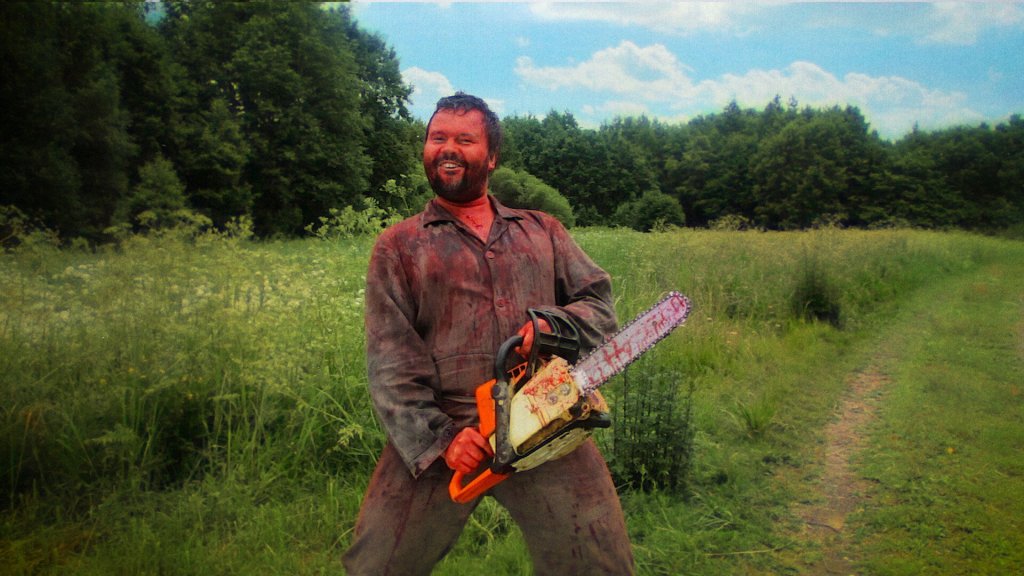
After over a decade in the making, Chainsaws Were Singing has finally exploded onto the international horror scene—and it’s not holding back. Blending musical numbers, gory kills, absurdist humor, and a hefty nod to exploitation cinema, the film has already earned over 20 awards across more than 80 festivals worldwide. We caught up with the filmmaker behind this blood-soaked rollercoaster to talk about its long journey, cult inspirations, and why there’s absolutely no dancing in his musical.
1. “Chainsaws Were Singing” blends action, horror, musical, and comedy elements. What inspired you to merge these genres into a single film?
Well, I like fun films and fully agree with the famous Frank Capra quote: “There are no rules in filmmaking. Only sins. And the cardinal sin is dullness.” Chainsaws is an exploitation film at heart, in the sense that every single scene has something special going for it to entertain the audience. Have a cute animal appear on screen every now and then and you’ve won 10 seconds of attention span when the viewers aren’t bored. Instead of having characters talk about their wants and needs, have them sing it with a funny song. For folks who hate musicals (mostly me included) throw in some gruesome kills with practical gore effects during the songs to offset the musical aspect.
We grew up watching Cannibal! The Musical, Monty Python and South Park, all of which I’d describe as comedy-with-no-limits, and that’s the same place Chainsaws is coming from. The action, music and horror bits came in here, as these genres make for a much wider playground on which to get some jokes in. But all in all, we just set out to make a fun and funny film that would shine bright in it’s tenacity to combine all the genres in a really dumb way.

2. The film was shot in 2013 but premiered in 2024, after 10 years in post-production. What challenges did you face during this period, and how did they shape the final outcome?
Oh boy! You could say challenges pretty much defined that decade. We had over 8000 video files + even more sound files from the film shoot, which took me about 2 months just to organize and rename the files. For 2 years I edited the impossible seeming footage into a working cut.
Then the challenges to complete the film were: sound design, vfx, music orchestration and color correction. For all of these we tried to find professionals to do these jobs, but sadly it didn’t work out, mostly due to our lack of budget and the project’s immense genre rich content. The latter had industry professionals scratching their heads, saying “yeah, I don’t have the time for this.”
After a year and a half of trying various formats of cooperation to finish the postproduction, but giving us no real results, I decided to go solo till the end. It was quite liberating, actually, since as a writer-director-editor I could incorporate new fresh ideas into all the remaining post-production fields, resulting in a characteristically unique synergy between all the sound, music, special effects and even music. You could fix problems in the editing using sound, solve issues in vfx with color correction, have grasshopper cricket sounds sneakily replace cymbal drum beats for absolute immersion into the songs, etc. It wasn’t the most professional result and workflow but it achieved a cool interweaved relationship between all the facets of post.
So yeah, all in all, it took me 2-3 years for the sound, which was almost entirely edited together from sound effects, we had to re-record about half of the film’s dialogue and vocals at an ADR studio, then 1 year of visual effects for the 350 vfx shots, 2 years learning musical orchestration from scratch for the 19ish original songs/score reprises and finally 2 bloody years to manually color correct the 3500 cuts from the god awful cheap video camera footage into a colorful retro grindhouse film look. Looking back, for the entirety of postproduction, in my mind I made 5 separate films, as every phase was completely different from the last. After having mastered the last field, I then had to start from zero again on the next, none the wizer, but perhaps stronger in my dedication.

3. The movie has been described as “Monty Python meets The Texas Chainsaw Massacre and Les Misérables” (Letterboxd). How did you balance absurd humor with horror and musical elements in the storytelling?
A bit was answered in the previous questions already but I’ll elaborate some more. It was a challenge to have the gore be mostly funny and not serious or gross. Our “goreographer” Jan Andresson intentionally made the blood a bit too red to have the viewer know they’re watching a movie and not real violence.
I also used all the post-production tools at my disposal to have the kills be funny – the sound was always extra squishy, the edit a bit over-the-top for emphasis, also, a ‘boing’ musical element never hurt anyone after throwing a machete through their crotch! Like a Looney Tunes version of a slasher film, let’s say.
However, to establish the antagonistic threat for the characters, I had to go “serious horror” in a couple of places, but that was not really the ambition of the film – so I balanced this off with a stupid jolly song like 2 minutes later.
I didn’t want it to be a full blown musical with too much singing, where the singing becomes awkward and cringe-worthy, so I only placed songs every once in a while – every song had to justify its existence by moving the plot forward or have a central joke or insight into a character. I purposely had the melodies be simple and catchy, to not veer into the “sophisticated musical territory” (that only over-educated composers seem to enjoy). Oh, and ABSOLUTELY NO DANCING was the key for the musical genre, to not enter into that icky musical territory!

4. “Chainsaws Were Singing” has been recognized at various international festivals, including winning Best Horror Feature at Fantastic Fest (FilmFreeway) and Best Feature Film at the Sinister Horror Film Festival 2024. How has the film been received internationally, and what impact has it had on your career as a director?
The reception has been a dream, really.
That on every single continent, excluding Antarctica (so far), the film has screened some 80+ fests in over 40 countries and won 20+ awards. We’ve received great reviews and fan letters everywhere from Indonesia to Mexico to the UK to South Africa, and luckily the fanbase is still growing, as the love for genre films truly knows no borders and the international horror community has been overwhelmingly supportive. But yeah, it’s a dream come true, knowing that the film has made so many people laugh and given them joy.
Career-wise, we’re still riding the Chainsaws’ train, as we have already signed distributon in US/Canada and German territories, but are actively working to expand distribution into other territories, perhaps Mexico?
By the way, I never did consider myself a director really, just a filmmaker – as directing was only a small but necessary annoying stage to get to the more fun stuff in post, something I clearly enjoy more. Maybe because there’s way less stress than a film shoot and it’s just a more relaxing existence, having an undo button for pretty much everything.
Having said all that, I’ve met some great people throughout our festival year and Chainsaws’ success already makes it way easier to get a next project going. But this time, we will NOT make a two-hour musical in Estonian!

5. The film features unique musical numbers and an unconventional narrative. What cinematic or artistic influences shaped your style and approach in this project?
For obvious musical influences, I’d cite Broadway’s The Book of Mormon, Avenue Q, Monty Python’s Spamalot and Little Shop of Horrors and of course everything by Matt Stone and Trey Parker.
All the later can also be considered as our core comedy influences.
For obvious horror references, Peter Jackson’s Dead Alive and Bad Taste, Evil Dead 2 and Texas Chainsaw ’74.
For action reference, wide angle shots and camera movement as a whole, and the film that gave me the inspiration to even make a DIY film, obviously El Mariachi, Desperado and Robert Rodriguez’s earlier works, like Roadracers. All that can of course be traced back to John Woo’s earlier Hong Kong action films.
In addition to the action category, however, I’d also mention that I’m a big Buster Keaton fan and feel that his physical humor, combined with our horror genre transcended Chainsaws’ genre from slapstick to what we’d call “splatstick”.
For color grade and look, I borrowed heavily from Hobo With a Shotgun and Planet Terror and the camera framing has strong influences from Russ Meyer’s work (the ones he shot himself, as I believe he was an amazing cinematographer). The look of Jean-Pierre Jeunet’s earlier works has also been a big influence.
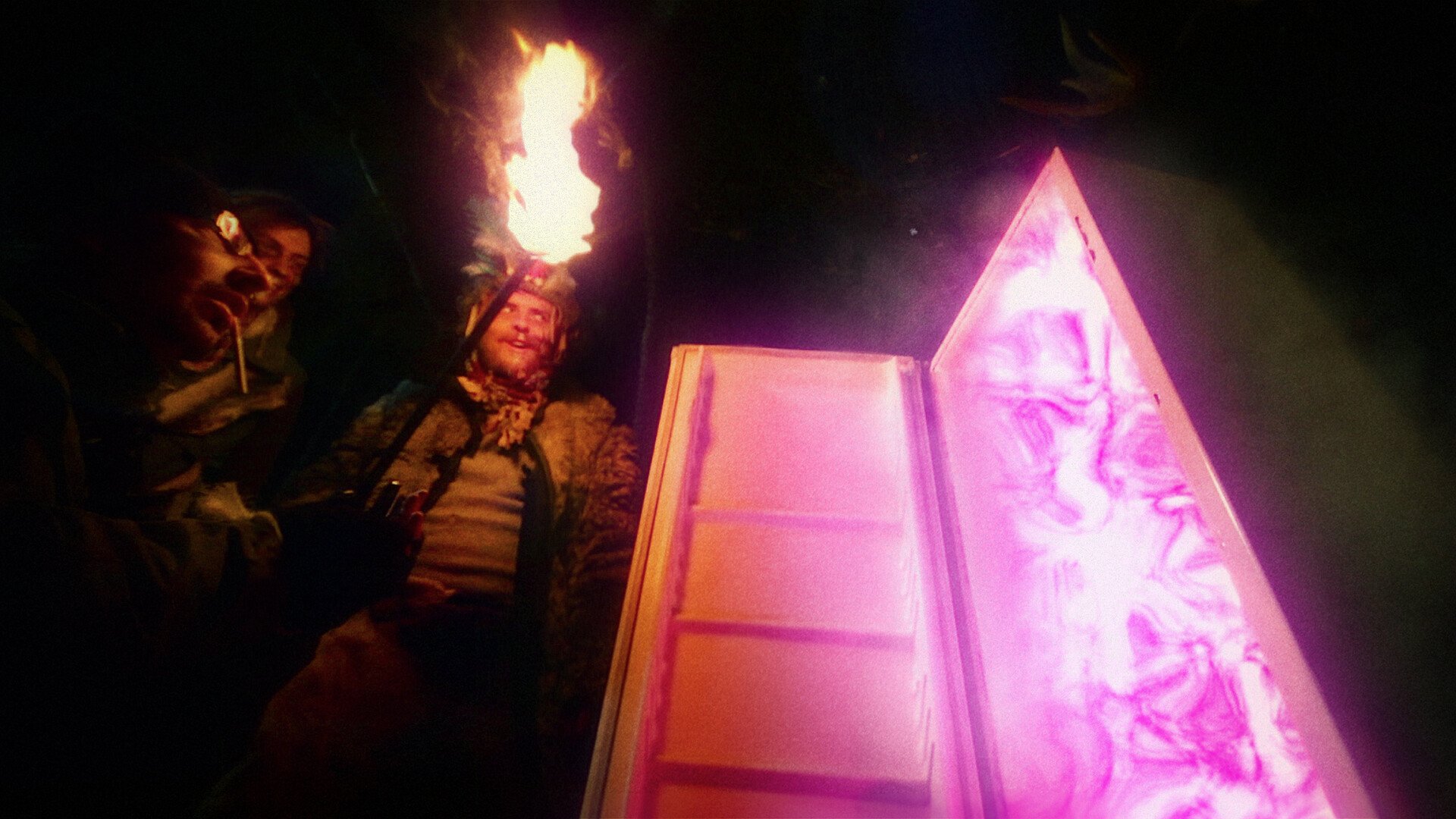
6. As your debut feature film, what key lessons and experiences would you highlight from the process of making “Chainsaws Were Singing”?
Knowing how to make short films doesn’t really prepare you for a feature! The thinking is just different and you have a way more complicated task to juggle all the elements of a feature film.
For Chainsaws, we shot something like 28 short film style scenes with an introduction, development and culmination, but then had to completely redesign it in editing, as the pulse of a story can never be paused and you need to travel from one scene to another without losing momentum. So I killed a LOT of our babies here but it was worth it for the bigger picture. That’s one of the main lessons – you’ll feel good sacrificing something small for the whole. And you should always make these decisions thinking about the viewer’s experience, and NOT about you as a filmmaker.
Also, making your first feature with friends and family is both cost efficient but just so much FUN, so I’d definitely recommend doing that.
And finally, as to the lessons learned in post-production – you’re capable of achieving pretty much anything, if you’re willing to suffer through the painful learning curve and have some time to waste.

7. For those interested in learning more about “Chainsaws Were Singing” and your future projects, where can they find more information and updates?
Check out our website www.ChainsawsWereSinging.com for any updates (new Lesbo-Hog merch is out!) and also our social media platforms. There we’ll be linking distributors as well soon for any territory releases and you’ll be updated when the bluray or soundtrack or any other fun stuff is out!
 sinisterfilmfest.com
Leave a comment