
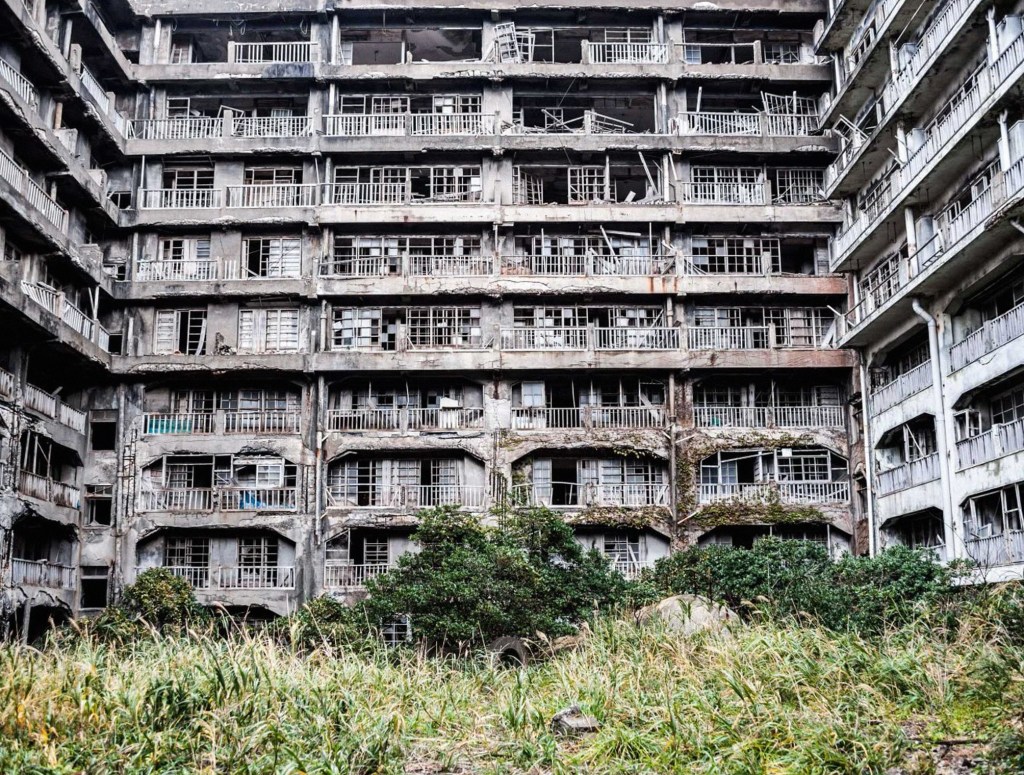
Once the most densely populated place on Earth, now a ghost ship of steel and salt.
Off the coast of Nagasaki, a slab of concrete looms from the water like the wreckage of a drowned civilization. Locals call it Gunkanjima, or “Battleship Island,” for its fortress-like silhouette. But beneath the crumbling towers and rusted beams of Hashima Island lies a history far more haunting than any warship.
The Rise: Coal, Concrete, and Control
In the late 19th century, Mitsubishi purchased the island to extract undersea coal. To house the growing workforce, the company built massive apartment blocks, schools, a hospital—even a cinema—all crammed into 16 acres of rock. At its peak in the 1950s, over 5,000 residents lived on the island, making it the most densely populated place on the planet.
But life on Hashima was claustrophobic. Surrounded by seawalls and surveillance, families lived in suffocating concrete blocks, with typhoons pounding on the windows and coal dust staining every breath. Beneath the surface, tunnels stretched deep into the seabed—dark arteries where miners worked in blistering heat and near-constant danger.
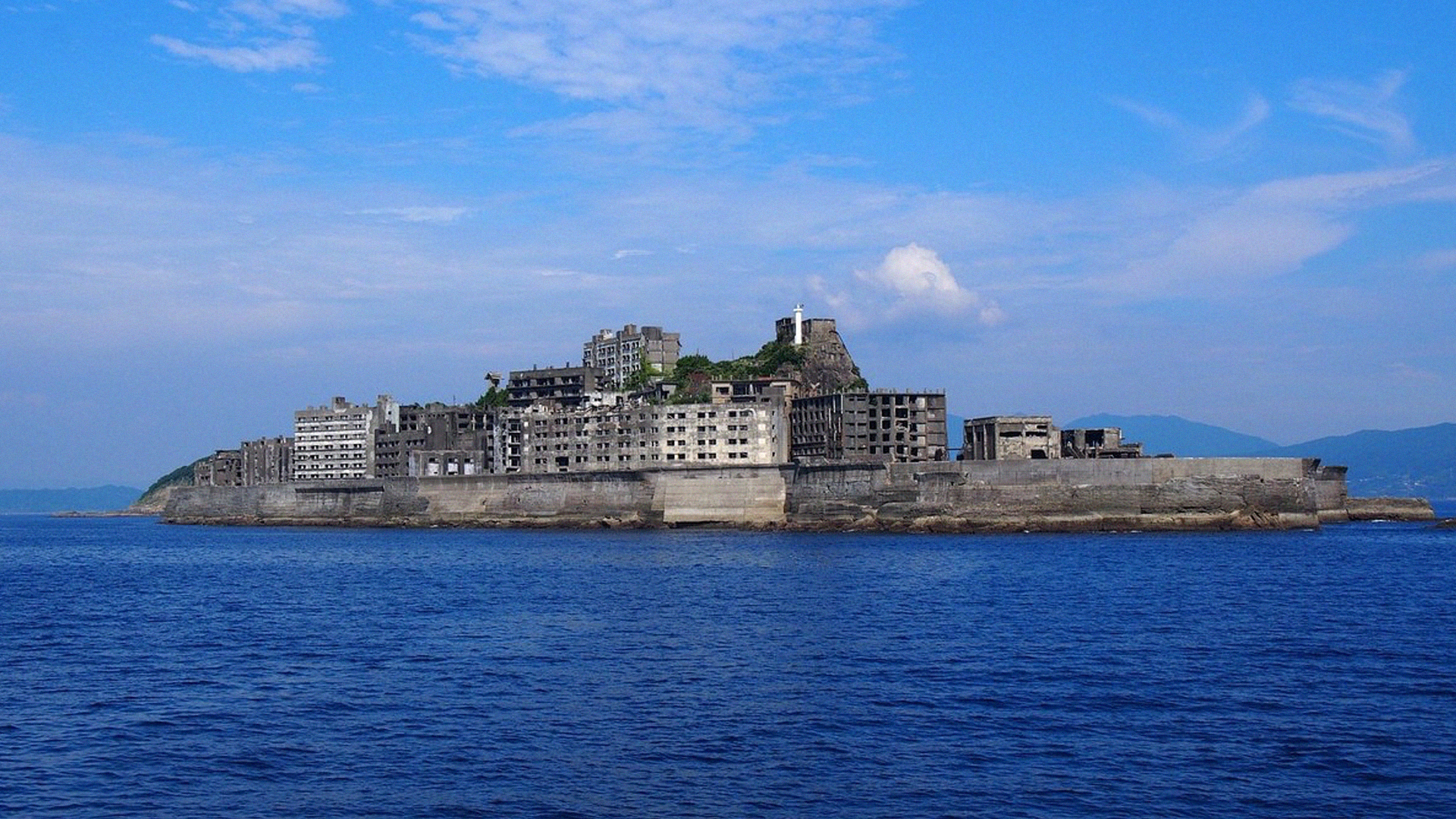
The Fall: When the Lights Went Out
In 1974, the coal ran dry. Without warning, Mitsubishi shut down operations. Residents were given mere hours to evacuate. Homes were left untouched, laundry still hanging, schoolbooks open on desks. Hashima was abandoned overnight—its concrete corridors echoing with the ghosts of a vanished society.
For decades, the island was off-limits, slowly surrendering to salt, wind, and time. Nature reclaimed nothing; concrete does not rot—it crumbles. The skeletal remains of stairwells, corridors, and rusted railings still stand, like a mausoleum preserved in the sea.

The Haunting: Memory in the Ruins
But the decay isn’t all that lingers. During World War II, the island’s mines were worked by forced laborers from Korea and China, many of whom died in brutal conditions. Survivors have described starvation, beatings, and bodies buried in the darkness. Their stories remain contested by some, but the scars in the tunnels—and in memory—are harder to deny.
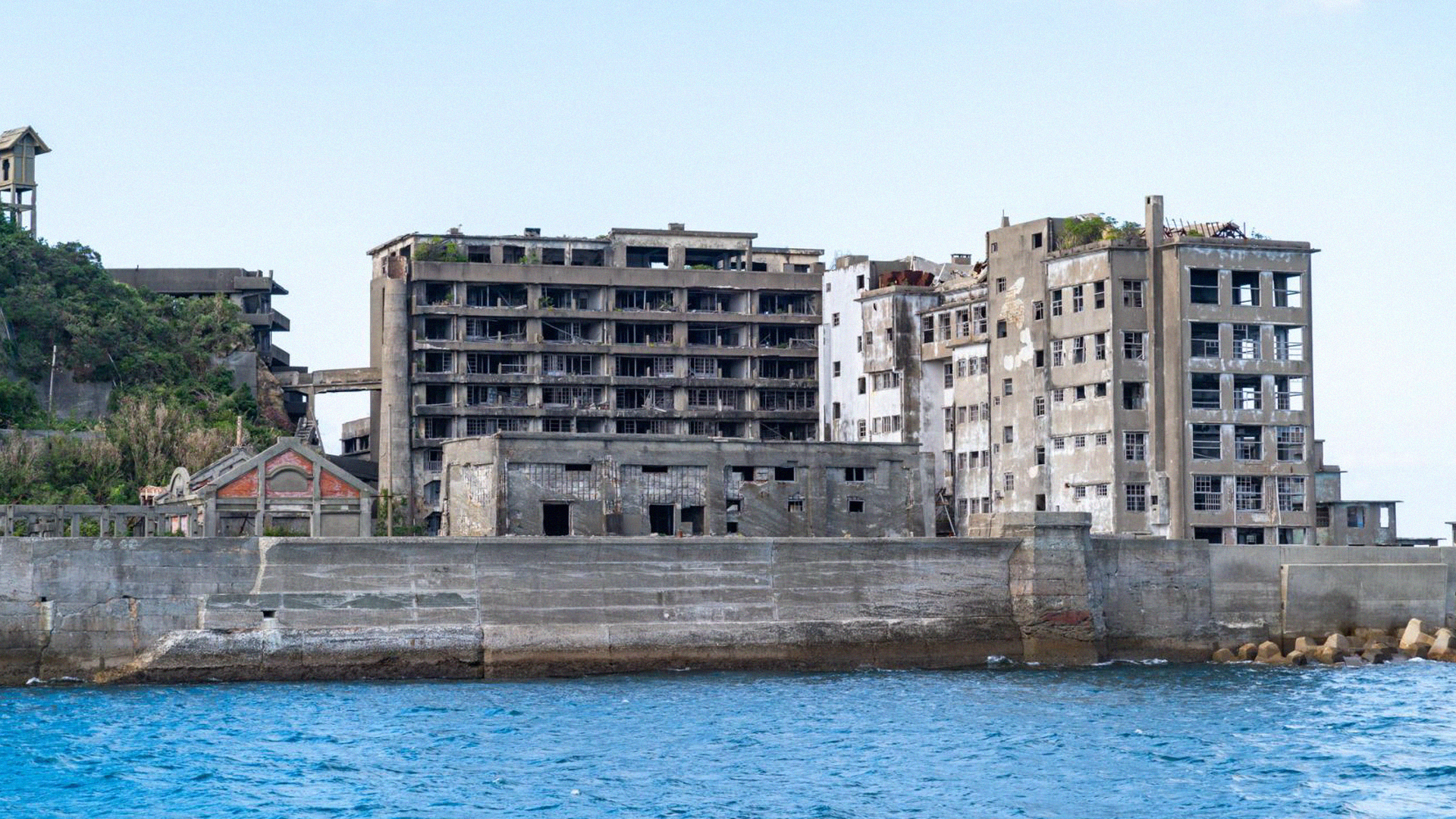
Despite its grim history, Hashima has entered pop culture. It served as inspiration for dystopian worlds in anime and was featured as a villain’s lair in Skyfall (2012). Tourists now visit a designated safe area, though over 90% of the island remains forbidden—too dangerous, too fragile, or perhaps, too haunted.
Hashima is not just abandoned. It’s entombed.
And inside its bones, something still whispers.
 sinisterfilmfest.com
Leave a comment