
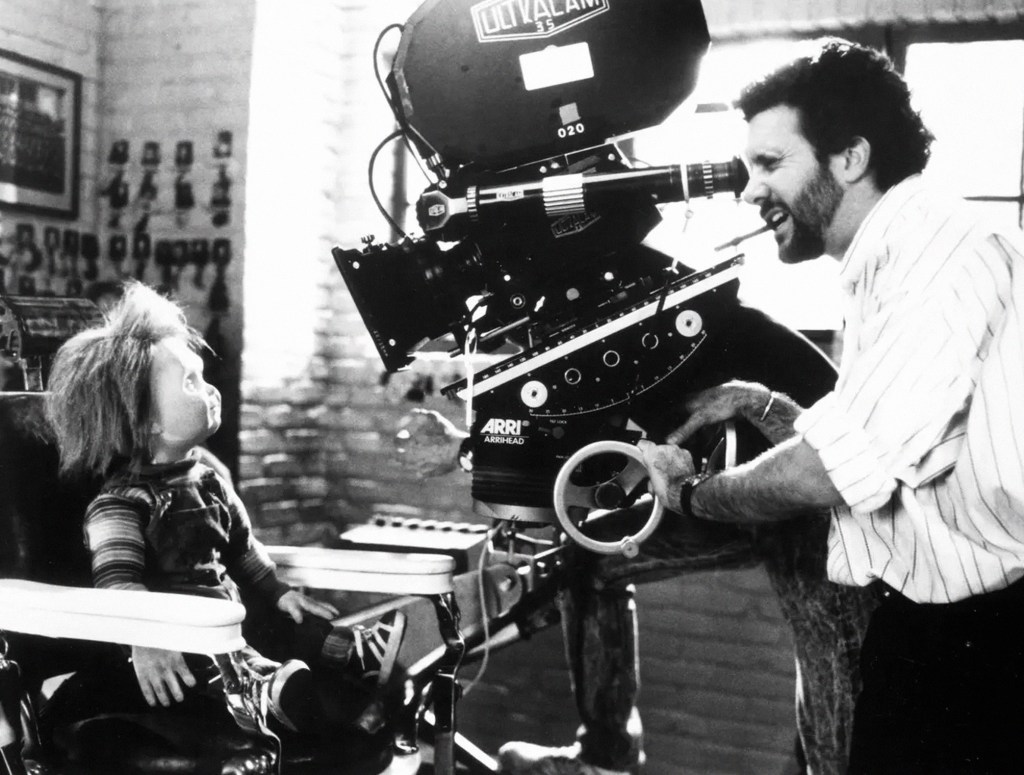
How to direct the viewer’s fear through camera language — from slow crawls to voyeuristic traps.
In horror, the camera is not just a passive observer. It is the predator. It stalks, reveals, disorients, and isolates. Every pan, every push-in, every locked frame has a psychological consequence. Mastering horror direction means understanding how the lens manipulates not just what is seen — but how it is felt.
In this article, we break down how top-tier horror filmmakers use camera language as a tool of dread, suspense, and revelation. This is not theory — it’s strategy.
1. Stillness as Threat: The Power of Locked Frames
Before you move the camera, ask yourself: should it move at all?
Directors like David Robert Mitchell (It Follows) and Ari Aster (Midsommar) often weaponize the static frame. A locked-off shot invites paranoia — especially when the audience is trained to scan for movement. It’s not just what’s in the frame… it’s what might enter it.
Case Study:
It Follows often plants the camera and lets the monster walk into the frame, in real time. No cuts. No music cues. The horror arrives with the patience of death itself.
Use locked frames to force the viewer to participate. They’re no longer watching a scare. They’re waiting for it.
2. Subjective Camera: When the Viewer Becomes the Victim
The use of first-person perspective can be powerful — but subtle shifts toward subjectivity are even more effective. A camera that trembles, breathes, or hides behind objects turns the audience into participants.
Techniques:
- Steadicam stalks through narrow spaces
- Peeking around corners (a voyeur POV)
- Slight hand-held movement in moments of emotional collapse
- Shallow focus that mimics tunnel vision
Case Study:
REC (Jaume Balagueró & Paco Plaza) doesn’t just use found footage — it commits to it. The camera itself becomes the only witness, the only light source, and eventually, the only survivor.
Directors should ask: who is the camera in this scene?
Answer that — and the scene will direct itself.
3. Inverted Power: When the Camera Traps the Character
Traditionally, the camera empowers the viewer. In horror, it often imprisons the character. Wide-angle lenses used in tight spaces (The Shining) create dissonance. Dutch angles tilt reality. A slow zoom-out can reveal how alone — and exposed — a character really is.
Pro Strategy:
Reverse the classic rule of coverage: shoot close-ups after wide shots, not before. Show the context. Show the vulnerability. Then invade the space.
Example:
In The Witch, the slow zoom-ins through doorways and woods suggest not curiosity… but judgment. The camera becomes a moral force.
Use lensing and composition to turn the audience into silent witnesses — or worse, accomplices.
4. The Anti-Jump Scare: Using Movement to Build Pressure, Not Release
Jump scares are about release. But camera movement is about pressure.
A dolly-in that lasts too long. A tracking shot that leads nowhere. A slow pan that reveals nothing at the end.
These decisions frustrate expectation — and build dread. In The Exorcist III, a single wide shot down a hallway lasts nearly a minute before the scare arrives. But the shot is the scare. Every second of waiting is a nail in the viewer’s chest.
Advice:
Map tension like a music score. Let the camera swell — but don’t resolve the chord until the audience can’t bear the note anymore.
5. When to Break the Rules: The Horror of the Impossible Shot
Sometimes, terror demands transgression. The “impossible” shot — like a camera that glides through walls (The Haunting), rises into the sky without logic (Hereditary), or mimics inhuman perception (Possession) — can rupture the reality of the film in a single moment.
Used sparingly, these shots signal: something else is watching now.
Warning:
Only break logic when the narrative stakes justify it. If the world isn’t breaking — the camera shouldn’t either.
Final Frame
The horror director’s camera is not a tool of observation — it is a conductor of dread. With every frame, you decide whether the audience breathes, flinches, or leans in. Don’t just show the monster. Show the fear of seeing it.
The lens doesn’t just capture horror.
It becomes it.
 sinisterfilmfest.com
Leave a comment