
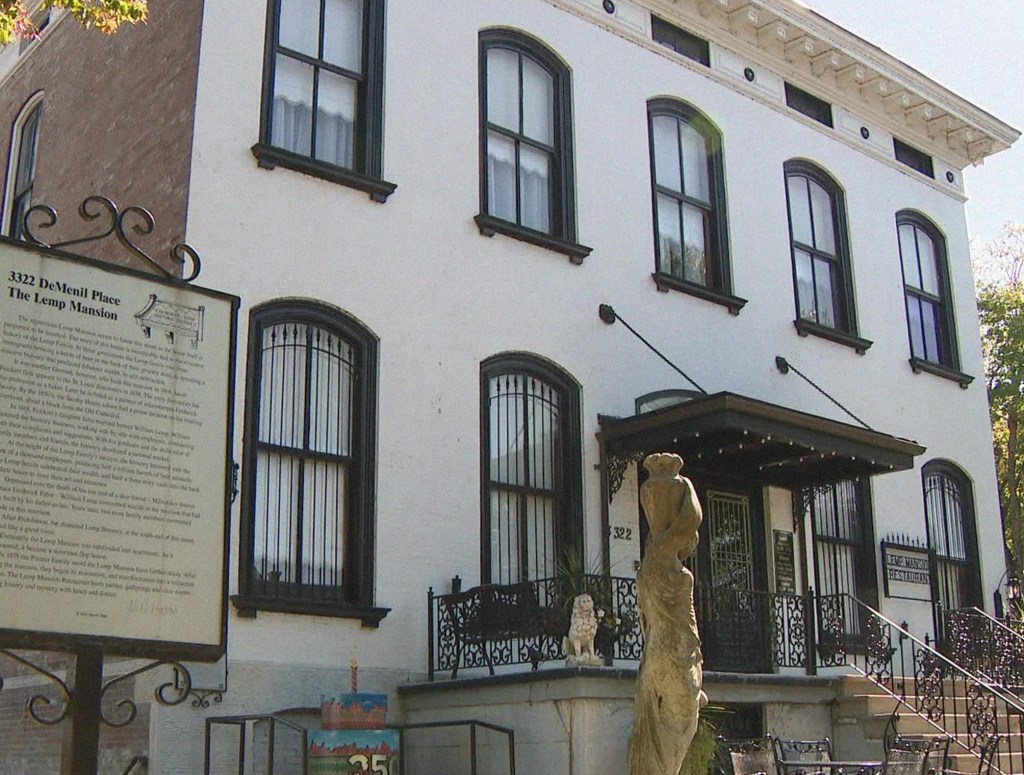
Behind the grandeur of the Lemp Mansion’s brick façade in St. Louis, Missouri, lies a story of tragedy so relentless it reads like fiction. Once one of America’s wealthiest families, the Lemps built an empire on beer—and lost it all to death, mental illness, and despair. Generations fell, one by one, to a pattern no one dared to call a curse… until there was no one left.
THE RISE OF A BREWING EMPIRE
In the mid-19th century, Johann Adam Lemp, a German immigrant, introduced lager beer to St. Louis. His business flourished, and by the time his son William J. Lemp Sr. inherited it, the Lemp Brewery had become one of the most successful in the country. With underground tunnels, natural cooling from limestone caves, and a booming customer base, the Lemp family was a symbol of American prosperity.
Their mansion, built in the 1860s, sat just blocks from the brewery. It was filled with ornate woodwork, imported chandeliers, and a private observatory. But behind its opulence, darkness gathered.
The First Death—and the Pattern Begins
In 1901, Frederick Lemp—the presumed heir—died of mysterious health complications at age 28. William Sr. never recovered. Grief-stricken and paranoid, he withdrew from public life. In 1904, after learning of a close friend’s sudden death, William took his own life in the family home with a gunshot to the head. His suicide was the first of four.
That same year, his daughter Elsa—once considered the wealthiest woman in St. Louis—married and soon divorced a prominent businessman. Though she remarried, her life spiraled into depression. In 1920, she too died of a self-inflicted gunshot wound. Official records ruled it suicide. But rumors of foul play and hidden family tensions have never faded.
The House That Watched Them Die
William Lemp Jr., now the patriarch, became increasingly volatile. After Prohibition hit in 1920, the brewery was forced to close. Once the source of their power, the family business vanished overnight. In 1922, facing financial ruin and personal disgrace, William Jr. shot himself—again, in the mansion.
His brother Charles, a reclusive and obsessive man, moved into the family home. He rarely left and kept servants under strict control. In 1949, he killed his dog, then himself, leaving behind a cryptic note: “In case I am found dead, blame it on no one but me.”
A Curse, or a Crumbling Mind?
By the mid-20th century, the Lemp line was virtually extinguished. Five family members had died by suicide, four of them inside the same house. Theories abound: Was the mansion itself the source of madness? Did pressure, genetics, and secrecy corrode their minds? Or had something older—something darker—anchored itself to their blood?
Several modern studies suggest a combination of mental illness, family dysfunction, and cultural silence around grief. But the sheer repetition of events defies simple explanation. Suicide was not just a tragedy in the Lemp family—it became tradition.
Afterlife of a Dynasty
Today, the Lemp Mansion operates as a restaurant, inn, and tourist attraction. Visitors report footsteps on empty staircases, disembodied voices, and cold drafts in sealed rooms. Some say the house is still watching—just as it did for decades, from behind velvet curtains and shuttered windows.
Whether or not the Lemp family was cursed in the supernatural sense, one truth remains: their legacy is not one of beer or fortune. It is a haunting lesson in how silence, pressure, and unresolved grief can become a prison—one passed down through blood.
The Lemp curse wasn’t born of a ritual or a vendetta. It grew quietly, from within.
 sinisterfilmfest.com
Leave a comment