

FROM THE STARS, THEY WATCH — Issue 02
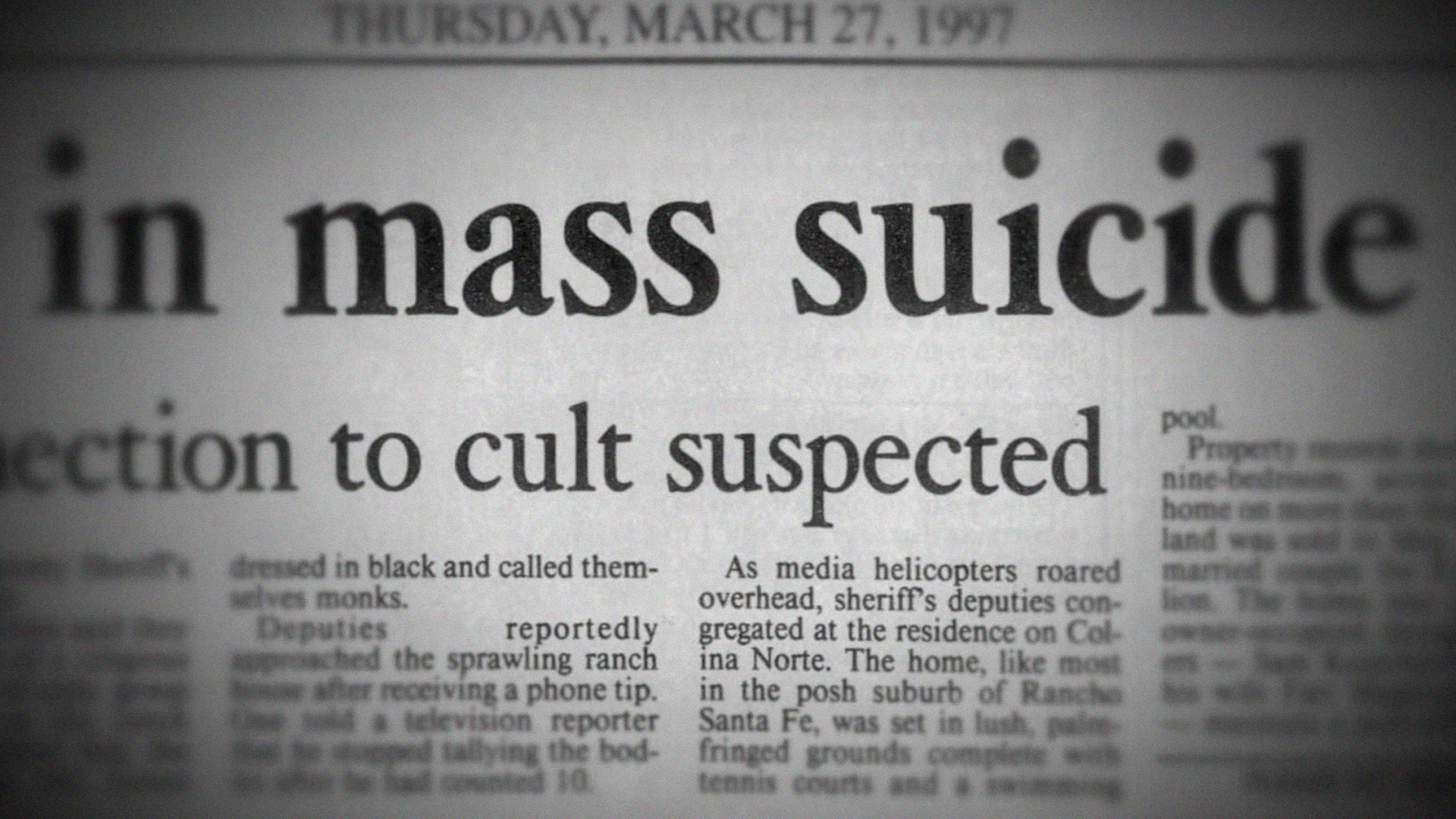
On March 26, 1997, the San Diego Sheriff’s Department made a discovery so bizarre, so deeply unsettling, that it would come to symbolize the darkest intersection of belief, isolation, and cosmic terror in American history. Thirty-nine bodies, dressed identically in black clothing and Nike sneakers, were found lying peacefully in bunk beds inside a luxurious suburban mansion in Rancho Santa Fe. Each wore a purple shroud over their face. Each had willingly embraced death.

They were members of Heaven’s Gate—a doomsday cult that believed salvation would arrive not with angels, but aboard a spaceship trailing the Hale-Bopp comet.
The group’s origins trace back to the early 1970s, when Marshall Applewhite and Bonnie Nettles met and formed a belief system they called “The Evolutionary Level Above Human” (TELAH). They preached that Earth was a corrupted realm, destined for “recycling,” and that the only way to transcend it was by rejecting all attachments to the human world—including family, identity, sexuality, and even the physical body.

To followers, Applewhite—known as “Do” after Nettles’ death—was not just a prophet. He was a representative of higher beings, a vessel of truth in a world of lies. His doctrine merged apocalyptic Christianity, science fiction, and a militaristic hierarchy reminiscent of a star-faring cult. The body was a “vehicle,” Earth a decaying test site, and only those who awakened to the truth would be “beamed up” aboard a spacecraft to begin the next stage of existence.
When astronomers confirmed the appearance of Comet Hale-Bopp in 1997, Heaven’s Gate saw it as a sign. Rumors circulated online that a spacecraft was hiding behind the comet, invisible to telescopes. Do seized upon this, declaring it the long-awaited moment.

In a series of chilling farewell videos recorded days before their deaths, the members appeared calm, even joyful. Smiling, they said goodbye to the “Human Kingdom” and expressed excitement for the journey ahead. They took phenobarbital mixed with applesauce or pudding, followed by vodka, then secured plastic bags over their heads to ensure asphyxiation. The suicides were staggered over three days, each participant helping the next prepare for “exit.”
Among the deceased was Thomas Nichols, brother of Star Trek actress Nichelle Nichols—an eerie footnote that underscored the group’s entanglement with science fiction and pop culture.
What makes Heaven’s Gate so terrifying isn’t just the mass death—it’s the cool logic with which it was pursued. These were not people driven to madness in the traditional sense. They were intelligent, methodical, and profoundly committed. In many of the exit videos, there is no hysteria, only peace. That eerie calm—the serenity of true believers—echoes louder than any scream.
More than two decades later, their website still exists, maintained by surviving members who continue to spread the teachings of Do. Their digital presence remains as frozen in time as the purple-shrouded bodies in that California mansion.
Heaven’s Gate wasn’t just a cult. It was a warning. That even in an age of science and satellites, the yearning for cosmic belonging can still lead us to follow a voice into the void—and never return.
FROM THE STARS, THEY WATCH.
And sometimes, we watch back…
Willingly.


Leave a Reply