
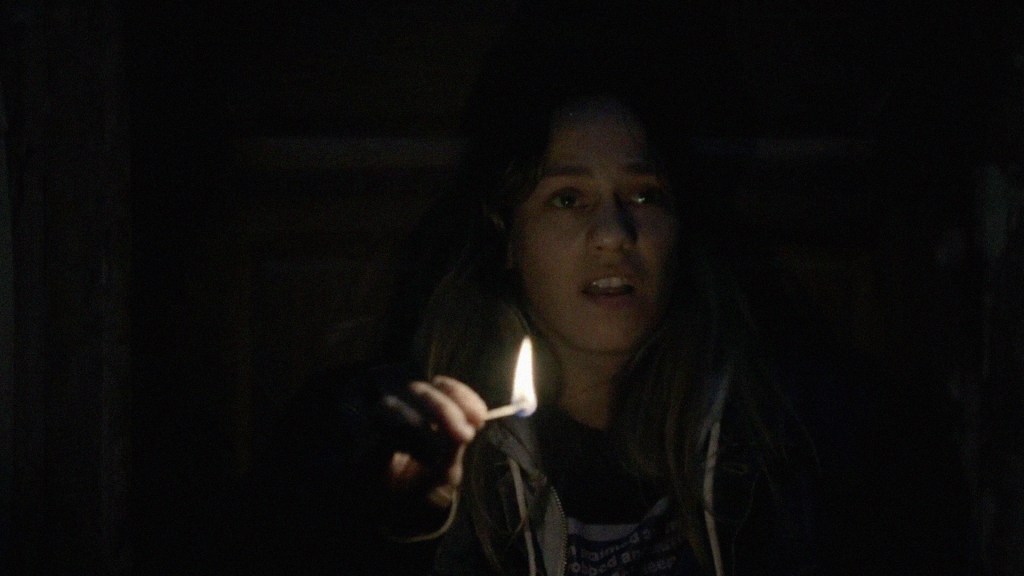
Darkness is not just an absence of light—it’s a presence, an entity, something that watches and waits. In the Shadows is a film that thrives on this creeping unease, using a minimalist approach to evoke primal fear. With a simple yet deeply effective premise—a chase at dusk where the threat grows stronger as the light fades—the film immerses the audience in a raw, suspenseful experience.
Behind this chilling vision is a filmmaker who understands that horror isn’t just about what we see, but what we feel. From its haunting cinematography to the eerie transformation of its entity, In the Shadows crafts an atmosphere of tension and survival, playing with subconscious fears that linger long after the credits roll.
In this exclusive interview, we delve into the creative process, visual storytelling, and the rising wave of French horror with the mind behind In the Shadows. Prepare to step into the darkness.
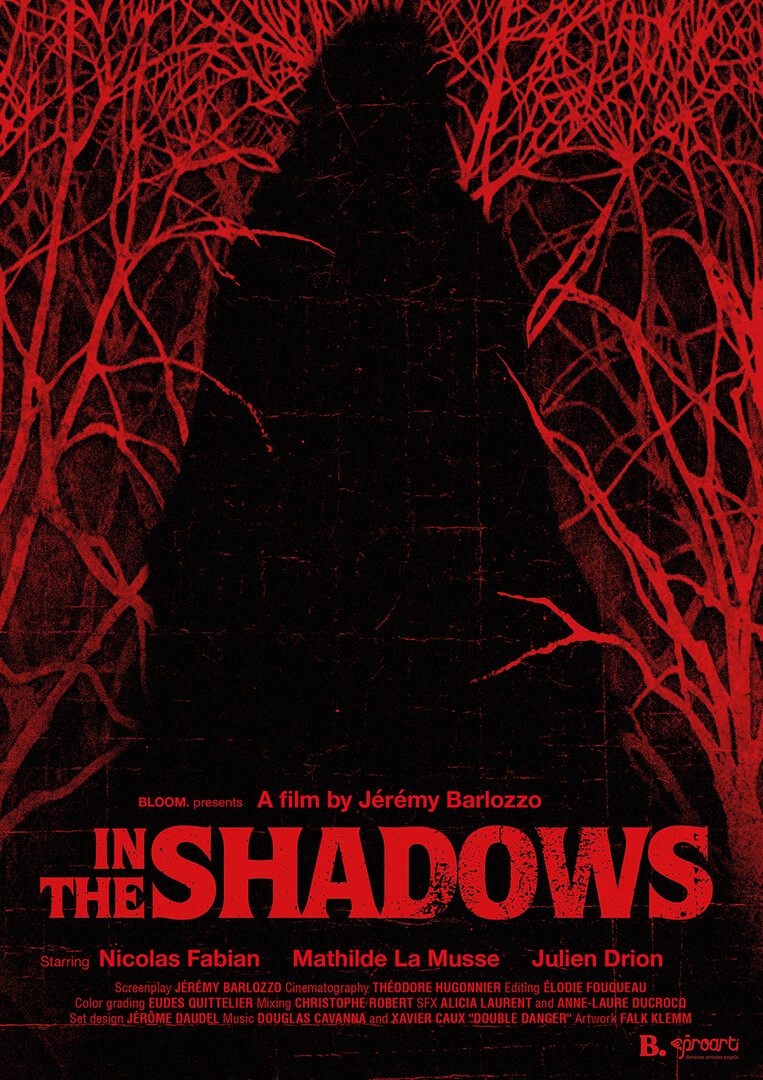
A Minimalist Approach to Fear and Survival
The starting point has always been to immerse the viewer in the heart of the action—saying as little as possible and seeing how much can be achieved with a simple setup. In this case, a chase at dusk with a threat that becomes more powerful as the light fades. Once this rule was set, everything we did aimed at optimizing situations that evoke something in the viewer’s subconscious, playing with simple fears within a very limited time.
So, we tried to have as much fun as possible with situations that stimulate the audience in the most playful way to create pure entertainment.
What we liked, in a way, was the idea that this film could stand alone but also serve as an introduction to a feature film. After the first shot—an ellipsis—then the film starts with new characters, and we learn more about everything that just happened. It’s an enjoyable exercise.
And concretely, what creates fear is also the authenticity of the acting. When I worked with Mathilde La Musse and Julien Drion, I knew I would see in their eyes the mystery and tension I wanted to create.
Visual and Sound Design: The Cornerstones of Atmosphere
Thank you for this remark—it’s a reward for the entire team.
The setting was always the cornerstone of this project. It’s a place that has always inspired me and even shaped the screenplay, as I wrote it with this house in mind. It was important to me that every movement within it felt believable. Then, there were more technical considerations, particularly concerning the lighting approach. The lighting affected not only how we filmed the house but also how we filmed the entity that chases the two protagonists. Showing too much would risk breaking the mystery, but at the same time, we had to play with darkness while staying on the edge.
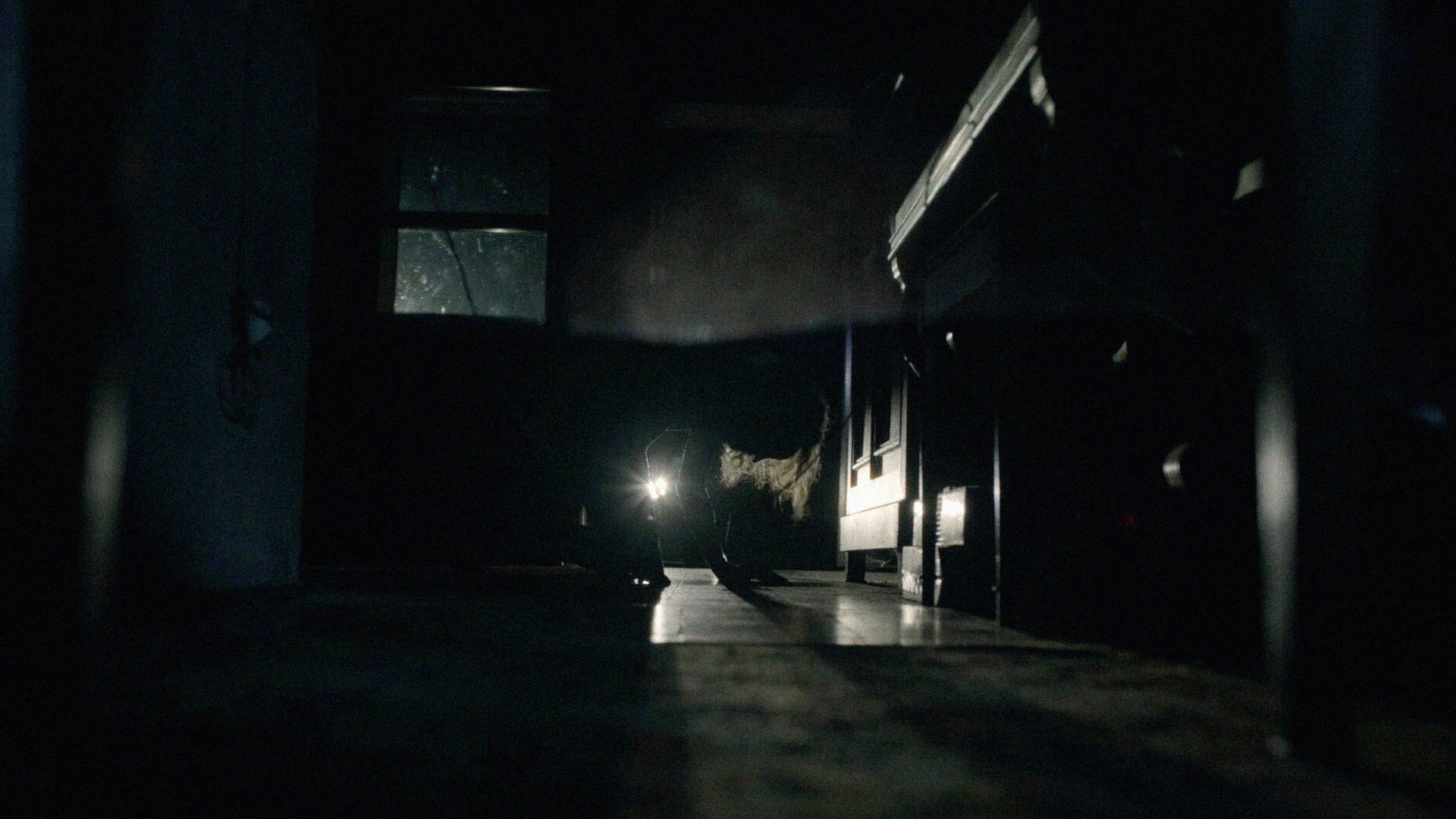
The Director of Photography, Théodore Hugonnier, did a remarkable job with his team on this. I forbade him from putting any light inside the house. Instead, he positioned lights all around the exterior. The idea was to spark creativity by working with constraints. We also adapted the writing after location scouting, adding the shot of the car to introduce more direct lighting and amplify the entity’s silhouette.
Once the lighting was defined, we worked with the makeup team on the artistic direction for the entity. I wanted it to look like it was emerging from the earth, slowly transforming until it eventually took on the most human form possible. I even wrote an entire parallel story around this image, which led to the idea of the large mural painting at the end. There’s a whole mythology built around this creature, which is both unsettling and magical. We put together an extensive artistic dossier with the most relevant references to create something deeply sensory. That’s why the idea of mixing earth with torn, damaged skin became so clear to us. This entity is as aggressive as it is sick.
Our actor, Nicolas Fabian, not only showed incredible patience during the makeup process but also invested 1000% in the role. He truly elevated the incredible work done by the makeup team.
The sound design emphasized the idea of a character undergoing a painful transformation. We also needed to focus on key transitions and moments of silence. The sound team at Blackwave Studio and the composers Double Danger fully embraced the mythology as it was written. The goal was to build a soundscape around a very alive, organic nature and to create cycles that mutate and degrade. They all did an amazing job—I’m very proud of it.
The Setting: A Balance Between Beauty and Oppression
It’s a special place that I’ve known for quite some time now. It’s the house of my best friend’s father. I’m lucky that they’re open-minded enough to let me do this in their home!
The house is located in the Morvan Regional Natural Park, in the heart of Burgundy. I love this region—it’s both beautiful and wild. The light constantly changes our perception of the place—sometimes reassuring, sometimes unsettling. I hoped this setting would bring a touch of folk horror that we explore within this particular mythology.
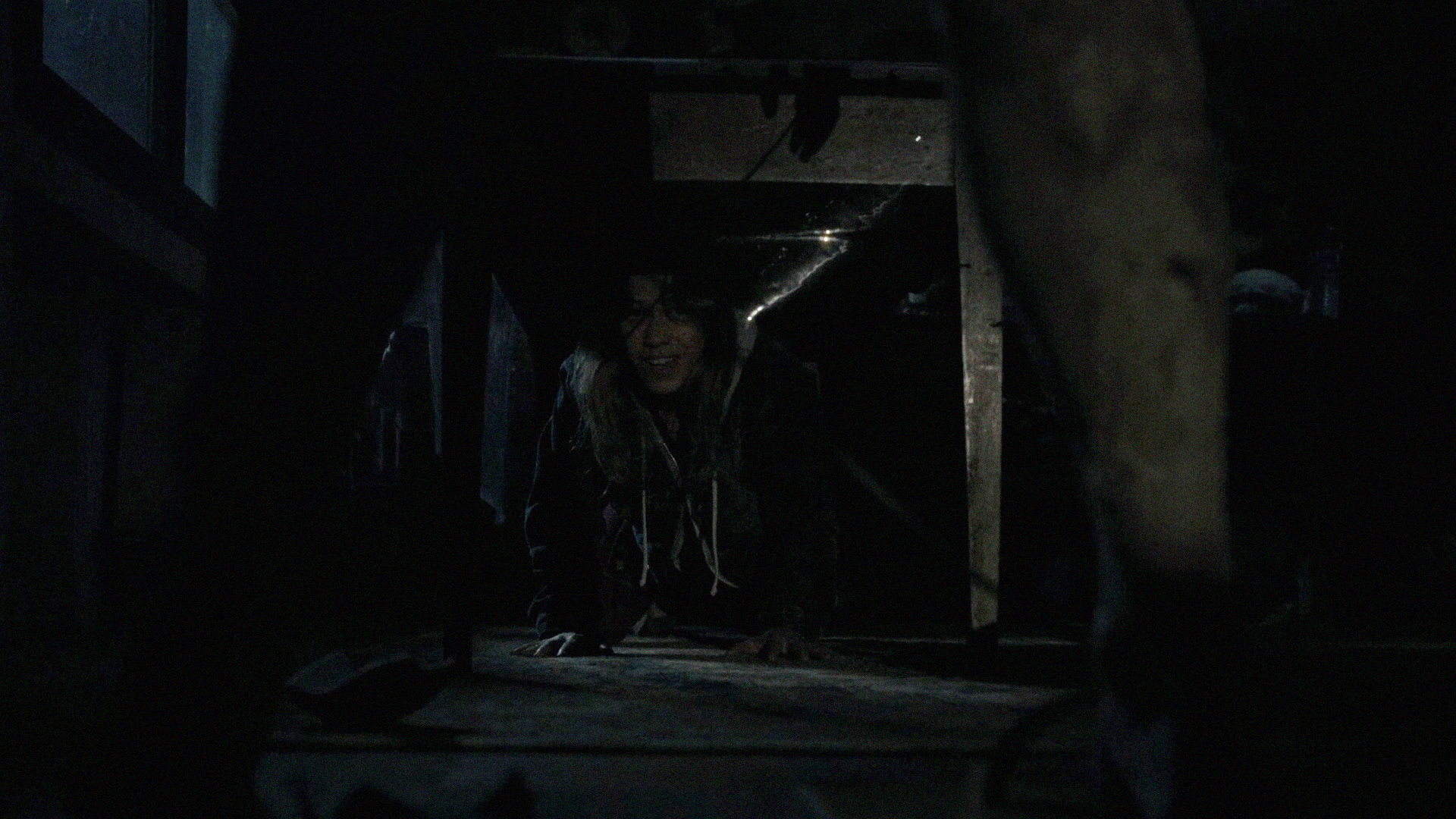
I love the shot when the character looks at the entrance to the forest. At that moment, it’s only the viewer’s imagination that comes to life in front of this impressive wall of vegetation. During location scouting, the place became obvious to everyone. A true source of inspiration.
French Horror and Its Evolution
I would love for my film to contribute to this new wave, but it is still confidential and outside any official funding system. In this regard, I would like to thank the producers of the film for believing in this project.
That said, there is an entire folklore in France that we’ve barely explored in the genre. There are still thousands of stories to tell based on regional and cultural specificities. There’s a real expertise here that should allow us to renew imagery, find new ways to embody horror, and embrace pure entertainment.
We do have a horror film tradition in France. I grew up with the generation of Aja, Maury & Bustillo, Laugier, and Gens… That was something! And now, audiences seem to be regaining interest in this kind of film. We are happy to see the success of Vermines, The Substance, and—even though it’s not French—the surprising theatrical performance of a trashy film like Terrifier 3.
We hope that distributors will start paying more attention to developing horror films.
A New French Horror Wave?
I think, very humbly, that this new wave of French horror is undergoing a metamorphosis. On one side, there’s a desire to break all conventions with fun and extreme storytelling. On the other, we have this tradition of always trying to make sense of our time.
This means that sometimes we can step outside of the typical, interchangeable character constructions. Personally, I admit that I’m a bit tired of characters built entirely around trauma, where the entire film is designed to overcome that one thing revealed in the very first minute.
In France, I feel like we’re at a crossroads. We might succeed in taking a path where we break free from the need to tick every single box. Of course, it’s still good to check some of them so the audience can follow along. In fact, In the Shadows doesn’t completely stray from this. But it’s exciting to take a few steps in a different direction.
I feel like we’re capable of reclaiming that boldness. In any case, we’re entering a very exciting phase, with still so much left to explore.
What’s Next for In the Shadows?
The next step is a selection in a major French festival. But until it’s officially announced, I remain a little superstitious. After that, continuing the festival circuit as much as possible. It’s incredibly rewarding to exchange ideas with other directors, passionate organizers, and the audience. And also to challenge ourselves with other approaches. It’s amazing to see the diversity of films in a selection.
As for future projects, I’m currently developing several ideas. Perhaps stretching In the Shadows further and bringing to life the mythology that, for now, only exists in the artistic dossier.
There are some projects that it’s still too early to discuss concretely, but 2025 is already shaping up to be very promising.
Where to Follow the Journey?
The best place is still Instagram. I love engaging with movie fans and even other directors there. I’m often surprised when they respond to me!
Social media, at the very least, allows for that proximity. So if you’ve seen In the Shadows, don’t hesitate to send me a message.


Leave a Reply