

In a world where personal data is the new currency and technology constantly blurs the line between privacy and exposure, Format emerges as a chilling vision of a future that feels disturbingly close. Directed by Darik Maurice and written by Mike Stechyson, this sci-fi horror short delves deep into the consequences of a society willing to trade its memories for convenience.
We spoke with Darik and Mike about the inspiration behind Format, the challenges of balancing sci-fi and horror elements, and the real-world technological anxieties that shaped the narrative. From dissecting the dangers of digital surveillance to navigating the intricacies of storytelling, the duo shares their journey in bringing this unsettling tale to life.
Join us as we explore the darker side of technological evolution and discover what lies ahead for Format and its creators.
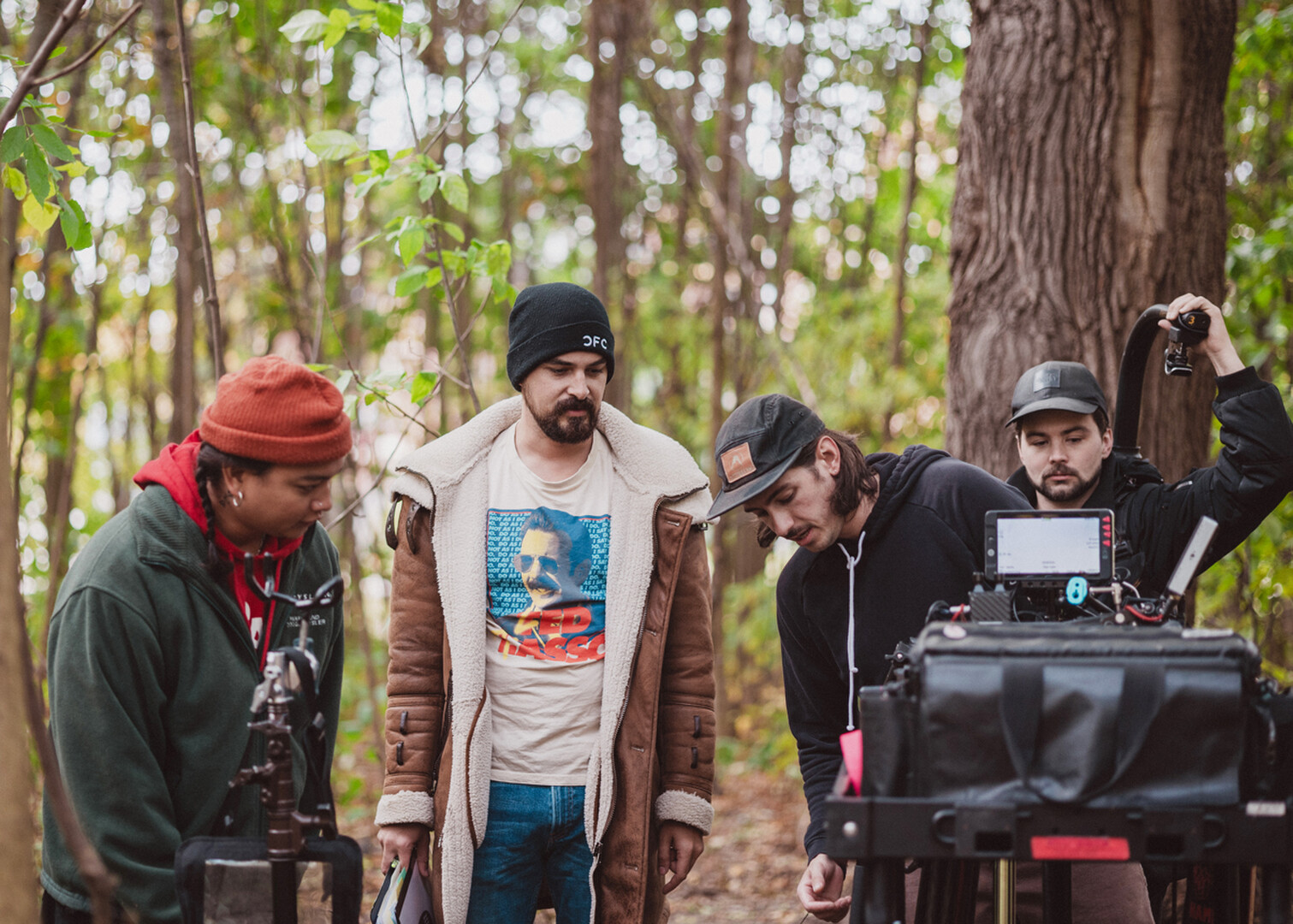
1. Sci-fi horror has long been a vehicle for exploring society’s fears. What inspired you to tell a story about the erosion of privacy and the ability to remotely access personal memories?
Darik Maurice:
Fear can be a funny thing. At the start of the digital age, if we were told that our privacy would be at stake and that one day not even our thoughts would be safe, I feel like there wouldn’t be social media, for example. And then, eventually, we were told that this was the case, and we collectively chose to ignore it for the sake of likes, exposure, and virality.
What attracted me to this story is that it holds a mirror up to the individual that takes all of this for granted and forces them to see the monster that’s been lingering over their shoulder for so long. I also appreciate how the story pushes a little further into a future we don’t quite have—yet—and depicts a very real potential, threatening something we still hold as our own and no one else’s: our memories.
Mike Stechyson:
In my final semester of my Digital Communications program, I studied a lot of theories about privacy and memory in the digital age. In a Critical Analysis of New Media course, we discussed the downsides of sharing our personal lives online, not just how it affects our privacy, but also how it shapes our perception of what a personal memory even means.
Is a memory something we cherish? Something we regret? More importantly, is it something we keep to ourselves? Or have our memories become less personal and more public, easily accessible to others? Do they still belong solely to us, or have we already relinquished that privacy without realizing it?
Sci-fi/horror is such a unique genre because it lets you explore these kinds of questions by imagining the potential consequences, both good and bad, of today’s technological advances. What might these technologies look like in the future? And what outcomes do we fear most as we continue to develop and “improve” them?

2. The film presents a chilling vision of the near future. Were there any real-world technological trends or ethical debates that influenced the concept of Format?
Mike Stechyson:
We’ve all seen how quickly digital technology has advanced in recent years. Remote and hybrid workplaces aren’t going anywhere, virtual reality is becoming more sophisticated, and artificial intelligence has completely flipped how we approach work, creative outlets, and even everyday tasks that rely on machines. It’s all so accessible. And the real currency, the most valuable resource that comes from using these tools, is data.
We share so much of ourselves with these devices and online, especially on social media, that we’ve made it incredibly easy for others to access our personal data—our memories. Think about how often we post videos and photos of ourselves, our experiences, our relationships (good or bad). The more we willingly put out there, the less our memories feel like intimate human experiences and the more they become a resource that others can collect and monetize.
I hate to sound pessimistic, but not all of this is being used for the greater good. Anyone with a computer can access our memories, and some can even dig deeper to learn things about us that we never explicitly shared. Privacy has completely gone out the window, and the thirst for data has become unquenchable. People are more than willing to take desperate measures to either acquire or safeguard it.
In Format, The Manager (played by Jarred Bronstein) and his Memory Heist tech represent the former: those seeking to acquire data at any cost. Meanwhile, the cheating husband, The Man (played by Samy Osman), and his ‘Banshee Cerebral Security’ memory guard (played by Brody Maurice) represent the latter: those willing to go to extreme lengths to protect their information.

3. As a co-writer and director, Darik, how did you balance the sci-fi and horror elements in the film to ensure both aspects remained equally compelling?
Darik Maurice:
I think there’s something innately scary about technology, especially the kind that doesn’t quite exist yet. So, in that regard, the horror element was always sort of lurking in the shadows, so to speak. And, to me, that’s what you want your horror to do for most of the film.
I think it’s important to keep the horrors at bay as long as you can until it bubbles to the surface and you just have to let it out. It’s a dance, too. As much as you want that horror to come bursting through without reservations, it plays so much nicer to give little glimpses once in a while; let it seep through ever so slightly here and there.
Then, of course, lean into it fully after all that teasing. And then, once we’ve played with the horror for a bit, bring in a final reminder that this is (and might soon be) real technology, so… watch out.

4. Mike, as the screenwriter, what were the biggest challenges in shaping the narrative of Format? How did you approach building suspense in a story centered around digital surveillance and memory intrusion?
Mike Stechyson:
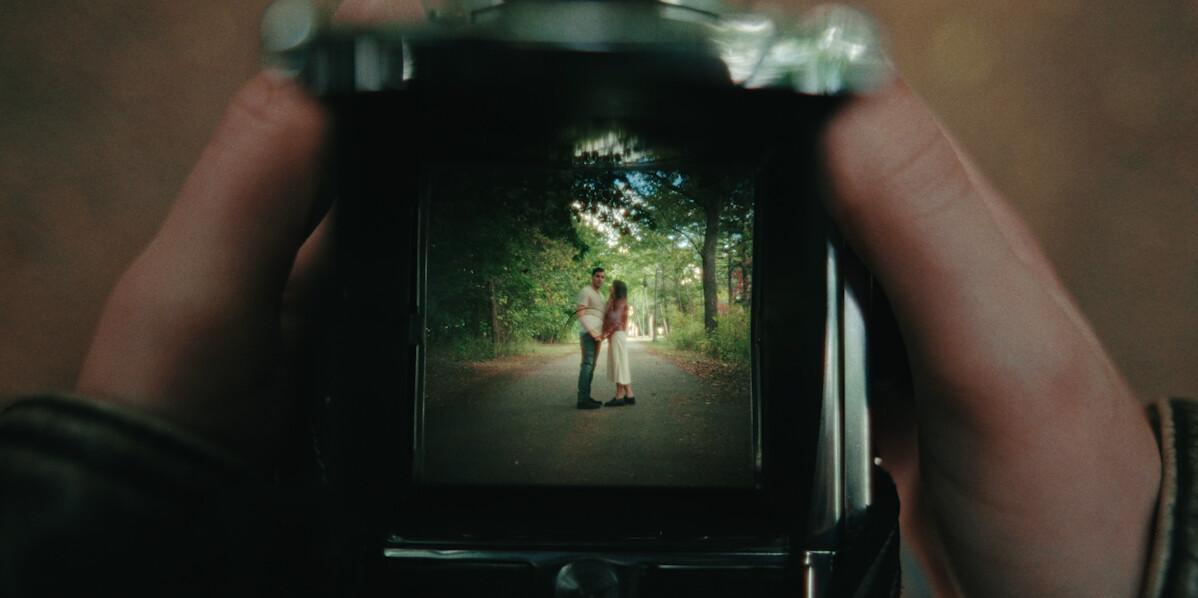
I completed the first draft of Format in December 2020. I had just finished my Bachelor of Digital Communications degree that spring, so a lot of the concepts I had studied were still fresh in my mind. Around that time, I received a Hasselblad 500CM—the camera you see in the film—as a graduation gift from my father and his business partner. I wanted to incorporate what I had studied in school with this vintage film camera. I asked myself:
“What kind of film could be made with this iconic camera that explored the misuse of photography as a data collection tool, rather than as a creative device for documenting personal experiences? And how can I make it a horror film?”Because I love horror—ha ha! The pieces were there. I had the concept, the characters, and the world they inhabited. But something wasn’t working…
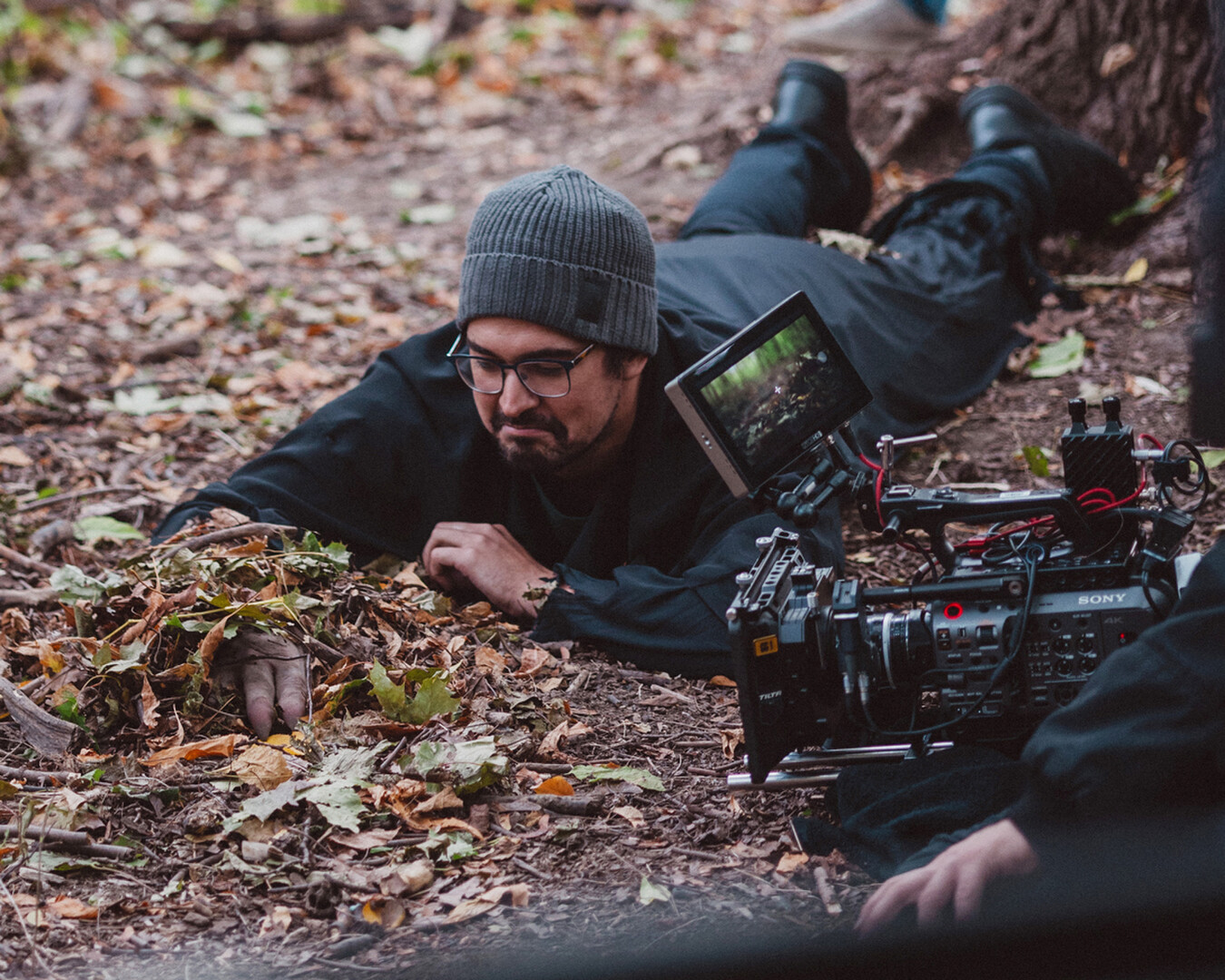
For me, the biggest challenge was exactly that: the narrative. There was no real story, no arc. To be honest, I was stuck. Enter Darik. When I was ready to start producing the film, he was the first person I called. Not only did I want him as my director, but I also knew that if this film was going to work, I needed someone who truly understood storytelling structure. Darik already had numerous short films under his belt, as well as several feature-length screenplays, whereas I had what felt like a thousand-piece puzzle scattered across the table with no clear picture of how to assemble it into something an audience would understand.
I knew I wanted the film to be a tragedy (in the Aristotelian sense), where The Collector succumbs to his fatal flaw, greed, and ultimately agrees to continue acting as The Manager’s (Jarred Bronstein’s) data-collecting puppet for their so-called “Memory Heists.” By the end of the film, any chance of benevolence is far out of reach for my character. This is where Darik and I really got to play with ideas and watch the story unfold. Writing this together was a lot of fun!
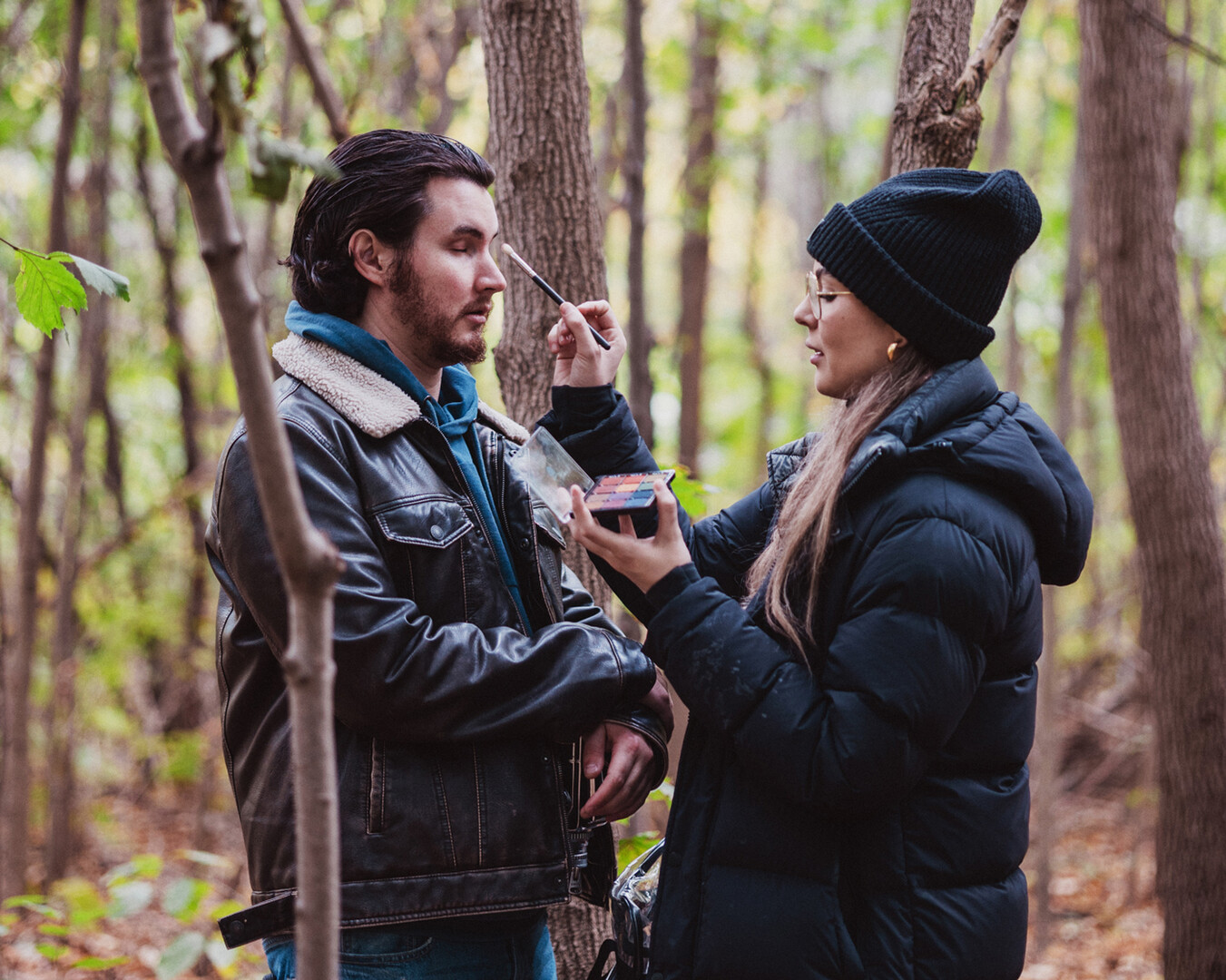
5. You’ve mentioned how much fun it was bringing this project to life. Were there any memorable or unexpected moments during production that stood out to you and the team?
Darik Maurice:
Memorable moments? Every single moment, honestly. And I think that came from working alongside friends and peers who are equally passionate in their field. I also remember that no matter how stressful the day got, or how late we worked, or how hungry we were, everyone was always smiling. That’s the kind of set I love to run, one where through it all, we’re all just really happy to be there creating.
As far as unexpected moments? The absolute final shot of the film. I had a vision for it that I wasn’t quite sure we could execute. At the very least, I thought I would be getting a dumbed-down or tame version of what I had in mind. The shot was the camera pushing in over an actress and tilting downward at the same time. Then, Ken MacLaughlin, with his small but mighty crew, told me:
“Yeah, we can do that. We’ll just rig it upside down.”
Blew my mind. It was like watching magic.
Another moment was watching my brother, Brody Maurice, walk onto set in the full monster costume. It was the dead of night, in a forest, a light had been rigged up to imitate the moon, and he’s almost 6’4. It was so cool and scary as hell.
Mike Stechyson:
Producing and executive producing for the first time was both thrilling and terrifying. Coming from an acting background, I had no clue what I was doing half the time or what I was getting myself into. But I was excited to learn more about the filmmaking process and what it takes to bring a project from script to screen. The most memorable part of this journey was making a movie with my friends. Most of the cast and crew already knew each other, so it was special seeing everyone enjoy themselves.
Working with Floor Light Films was another highlight. Darik, Riana Wibowo (sound designer and composer), and Ken MacLaughlin (director of photography) brought so much to the project. Sitting in the sound mixing facility, watching Darik’s final cut, Kenny’s shots on the big screen, while hearing Riana bring the monster’s scream to life is something I’ll never forget. I was lucky to have them in these key roles.
Acting alongside Jarred Bronstein, who plays The Manager, was another huge win. He’s one of my best friends and one of the hardest-working, most versatile actors I know. Trusting each other made our scenes even better. I hadn’t acted in this genre of film either. I had wanted to play a character like The Collector for a long time, and I’m glad I could do it on my own terms. It was a ton of fun.
On our final day of shooting, as soon as Darik called wrap, I was nearly in tears. I felt exhaustion, relief, happiness, and, most of all, gratitude. I started saving for this film in mid-2021, knowing it was a story I had to tell. Two years later, on October 15, 2023, it was finally shot. People have joked that I could’ve made a feature, but I have no regrets. I had so much fun making this film with the people I made it with, and that’s what matters.

6. Sci-fi horror is a genre that thrives on both spectacle and thought-provoking ideas. What are some films, books, or other works that influenced your approach to Format?
Darik Maurice:
I think the most obvious answer, and one audiences will most likely come to on their own, is that Black Mirror had a huge influence on the approach. Not one specific episode, but the concept of the anthology as a whole. Technology and the future are not to be trifled with because the dangers and consequences can be horrifying. Also, for me personally, Stephen King will always be a huge inspiration for storytelling. He’s like this absent father. I always hope I’m making him proud.
Finally, I have to give credit to Are You Afraid of the Dark? and Goosebumps (both as a book series and TV show). I’m a product of the 90s, and I’ve always been a horror kid, so I’d be remiss if I didn’t say those two influences are ingrained in what I create, especially in the space of short horror films.
Mike Stechyson:
The Matrix (1999) never ceases to amaze me. Its dystopian premise is terrifying, especially the idea of a future where artificial intelligence takes over. As I mentioned earlier, technology is evolving at an incredible pace. The more we feed into it, the more it learns, and the faster it grows.
The concept of The Banshee was loosely inspired by Agent Smith (minus the specs, suit, and Hugo Weaving’s signature voice—ha ha!). Adolfo Bioy Casares’s The Invention of Morel has also stuck with me ever since I first read it. That’s where the themes of virtual reality and memory come into play, particularly memories being recorded and used without a person’s knowledge or consent. For a book written in 1940, it does a remarkable job of predicting this technology and the consequences that come with it.
7. What’s next for both of you? Can we expect Format to expand into a feature-length project, or are there other projects on the horizon that you’d like to share?
Darik Maurice:
I honestly don’t know what’s next for Format specifically. Once it releases publicly, it will take on a life of its own, and whatever happens, happens. Mike has whispered to me from time to time that he would like to turn it into a feature, and I really want the next thing I make to be a feature. So, if the stars (and money) align…
Aside from that, I’m always writing. I’m currently in the process of writing three features, none of which I can dive into the details about at the moment. I can tell you one is a horror/comedy, one is a dark comedy/drama, and one is a sci-fi/horror with a splash of action. Just keep an eye out for my name, because I’m not stopping any time soon!
Mike Stechyson:
I’m definitely excited for Format to be released publicly. Film festival planning is a lot of work, so I’m relieved that part is wrapping up. It’s bittersweet, but I think we’re both ready to share the film without the restrictions of “premiere status.”
As for expanding Format into a feature, I’ve already started outlining the full-length version, and I have no intention of holding back on the horror elements. If I keep my momentum, I should have a first draft ready by Fall 2025.
Beyond Format, I’ve dusted off an old short screenplay—a horror-comedy. It’s bizarre, man! No doubt I’d have a blast making it. I’m also writing a treatment for a drama about a group of analog film and experiential photographers in Toronto. I’d love to tell a Canadian story about Canadian artists in the country’s most energetic city.
Creating Format made me realize how much I enjoy writing and producing while taking my love for acting to new heights. I’d love the chance to do all three again simultaneously. I enjoyed the challenge.


Leave a Reply