
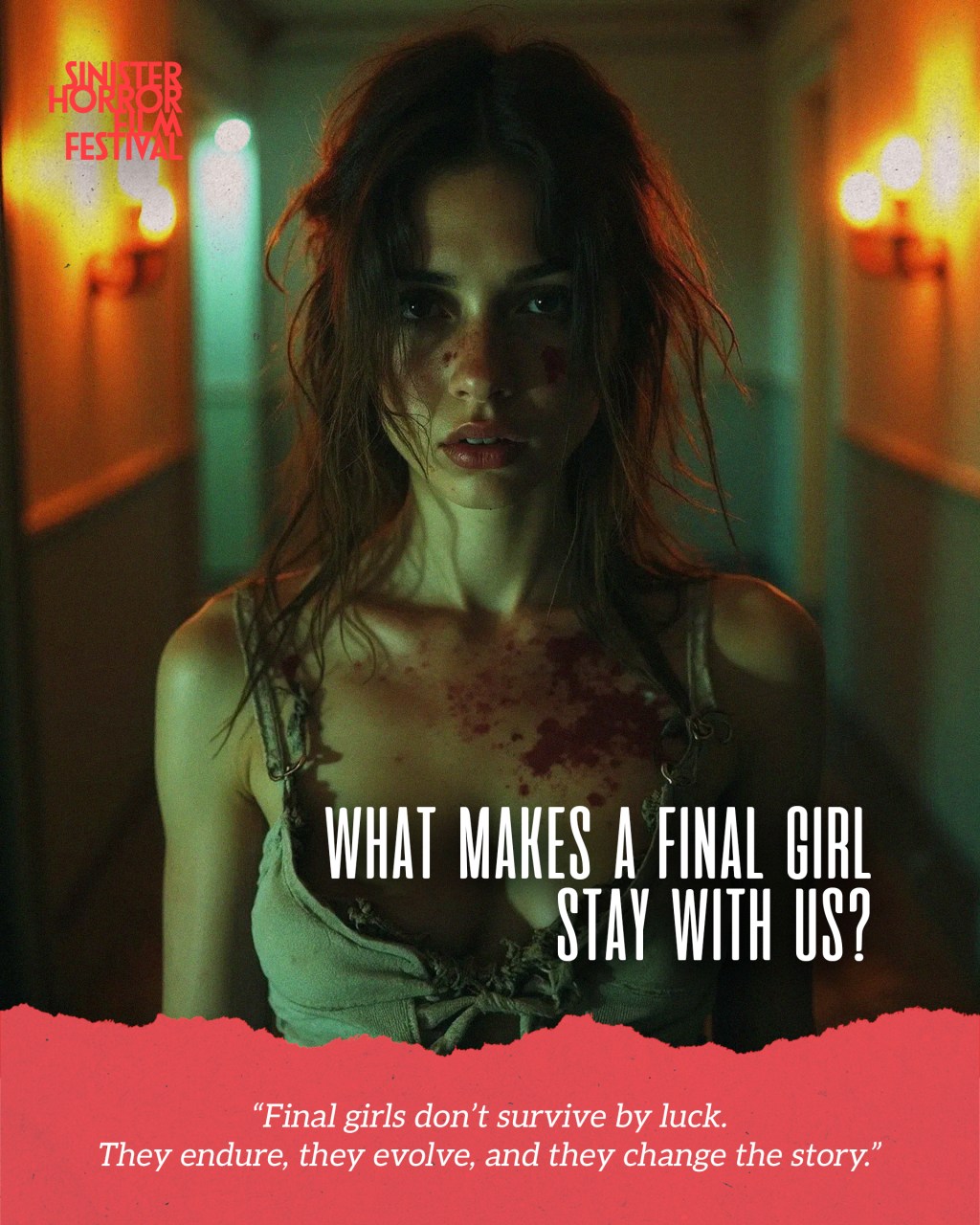
The Myth, the Trauma, the Transformation.
In horror, survival isn’t rare. But survival that echoes—that becomes legend—is another story entirely. Not every character who lives to see the credits rolls is remembered. The ones who are? We call them Final Girls.
And not all Final Girls are created equal.
From Ellen Ripley’s steel-eyed determination in Alien, to Sally Hardesty’s blood-soaked, near-mad escape in The Texas Chain Saw Massacre, to Sidney Prescott’s sharpened evolution across the Scream franchise—these are more than survivors. They are symbols. They are witnesses. They are weapons forged in the crucible of terror.
It’s Not Just About Living—It’s About Changing
What separates a generic survivor from a Final Girl we carry with us for decades? The answer lies in transformation. The best Final Girls don’t just endure horror—they are shaped by it. They bleed, they scream, they shatter, and then somehow, they stand up anyway.
There’s something almost mythic about this arc. Horror puts its heroines through hell, and we watch them emerge different—sometimes broken, sometimes hardened, but always altered. In Ripley, we saw leadership born from necessity. In Sidney, we witnessed trauma weaponized into strength. In Sally, we saw the raw edge of survival so vivid, it bordered on madness.
Underestimated, Undeniable
Often, the Final Girl is underestimated—by the killer, by her friends, even by herself. She’s the one no one expected to make it. Maybe she’s quiet. Maybe she follows the rules. Maybe she’s just trying to blend into the background.
But horror doesn’t let her.
It drags her into the center of the storm and forces her to become something new.
And when she rises, we believe her rage. We believe her fear. We believe her power.
More Than a Trope
It’s tempting to reduce the Final Girl to a formula: virginal, resourceful, morally pure. But the most unforgettable ones often break the mold. Ripley wasn’t even supposed to survive in the original draft of Alien. Sidney didn’t just survive one killer—she survived a legacy of violence. And Sally? She didn’t outsmart Leatherface—she outlasted him. Barely. Desperately.
These women aren’t heroic because they’re flawless. They’re heroic because they’re human, and horror doesn’t let them hide it.
The Moment That Stays
Every horror fan has one: that moment.
The one where everything shifts.
Ripley stepping out in the power loader.
Sidney answering the phone one last time.
Sally’s hysterical laugh as she flees in the back of a pickup, the setting sun painting her in blood and madness.
These moments stay with us because they speak to something primal.
Not just survival, but transcendence through terror.


Leave a Reply