

Victorian terror, folklore obsession, and a lifelong passion for monsters converge in The Legend of Spring-Heeled Jack, a screenplay that resurrects one of England’s most enigmatic and enduring urban legends. InF this exclusive interview, screenwriter and horror storyteller Anthony A. Labriola takes us deep into the twisted roots of his inspiration—from sixth grade library books to Gothic theory and pre-code horror comics. With a background in both children’s media and psychological horror, Labriola shares how his dual creative paths inform his writing, why Gothic tropes still haunt us, and what makes Spring-Heeled Jack more relevant than ever in today’s evolving horror landscape.
1. What made you want to write about Spring-Heeled Jack, and how did you adapt the legend into a script?
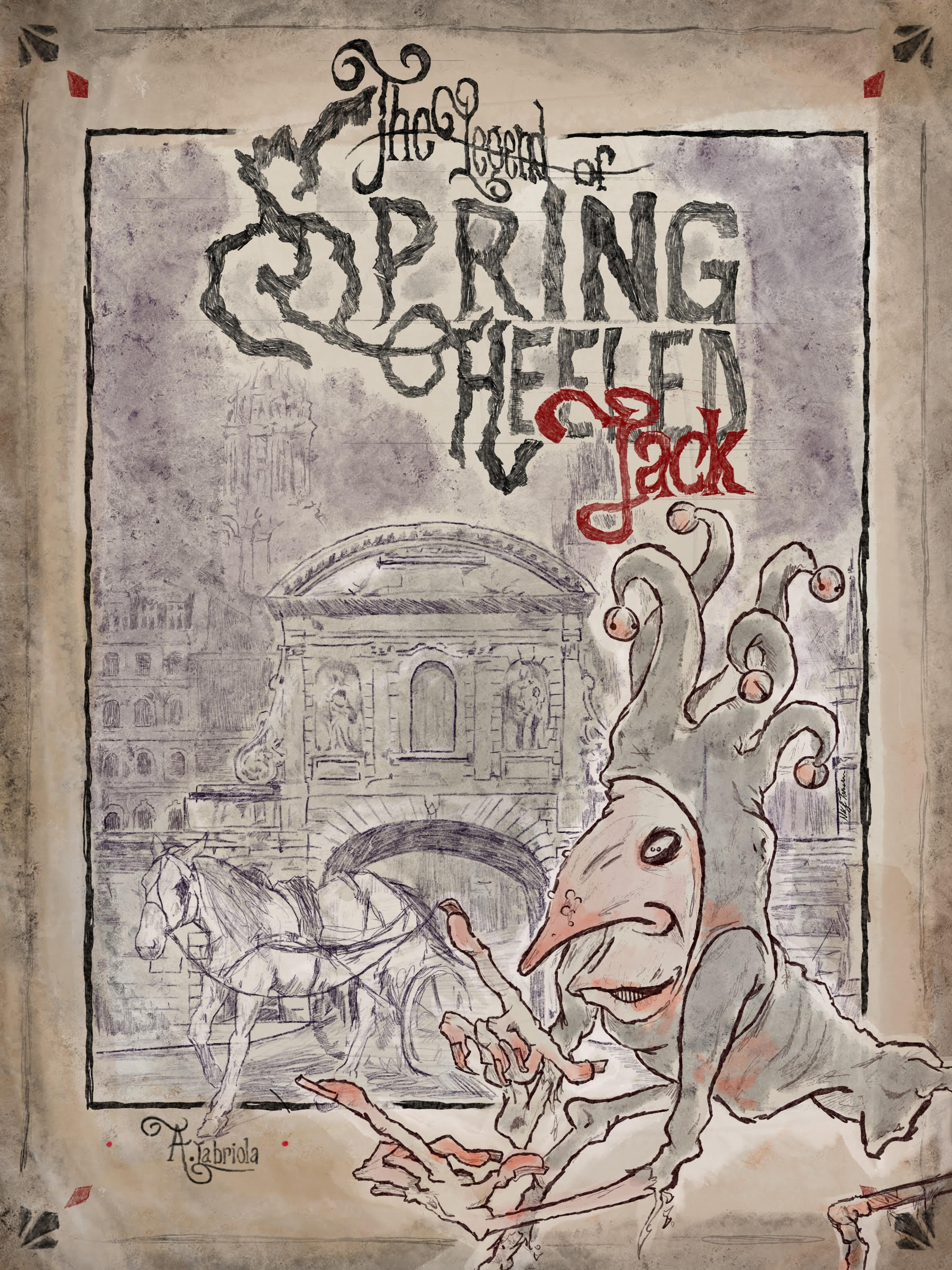
In the sixth grade I borrowed a book from my local library called Monsters You’ve Never Heard Of by Daniel Cohen – this was where I first learned about Spring-Heeled Jack and I became obsessed. I have wanted to tell this story since then and I’m so happy to have finally put it to paper. Spring-Heeled Jack is an important piece of English folklore with an elaborate and sordid history ranging from the early 1800s in England to eventual claimed sightings in early 1900s America. I knew I wanted to take the most exciting elements of all of these reported sightings and make what would feel like a classic Hammer Horror Creature Feature without capitalizing on the tragedies of the real-life victims of these sightings, so I combed through the sighting reports and the speculations that were relevant at the time, coming away with details like: “He was an escaped asylum patient,” “he kept himself hidden among traveling carnivals,” “he could leap over whole buildings,” “he breathes blue fire,” “he can mimic the voice of anyone he heard,” etc. All of these built up in my mind into the grotesque contortionist monster I wrote into this screenplay. I think the most important thing when writing historical fiction though is ensuring it is grounded in reality, and that’s where the brunt of my world-building came in; making sure that the settings, events, situations and characteristics of my characters would remain believable despite the unbelievable monster hunting them, right down to the catalyst of my version of Spring-Heeled Jack’s creation being rooted in a real-world historical event.
2. What makes a good gothic horror story in your opinion?
If you’ve ever heard me discuss the traditional Gothics on my podcast The Hauntsville Cryptcast, or if I’ve ever cornered you at a horror convention to rant and rave about Gothic literature, you’ll know I’m a hopeless devotee of Kate Ferguson Ellis’ The Contested Castle. The Contested Castle addresses the roles of women in traditional Gothics and why the ideals of home and safety are such prominent elements of Gothic stories. This is a major factor as to why about 60% of The Legend of Spring-Heeled Jack takes place in the protagonist’s home. Atmosphere and environment are perhaps two of the strongest footholds in Gothic storytelling, and if you can take something that is supposed to be as safe and familiar as home and make it feel dangerous, eerie, and foreign, then there is truly nowhere left for your protagonist to run and hide; they can only stand and fight.
3. Did you discover anything surprising about Spring-Heeled Jack while researching for the script?
Spring-Heeled Jack is exactly the reason I love folklore. Mothman, the Loch Ness Monster, the Hopkinsville Goblin— all of these creatures fascinate people for the same reasons as Spring-Heeled Jack: because there is so much that is deeply unknown about them. They are urban legends, stories passed along locally and usually by word of mouth, and always changing depending on who is telling them and how far away from their source they’ve gone.
I found with Spring-Heeled Jack that depending on where the alleged sighting took place, he took on different attributes to better meld with the customs of the place he was last seen—further grounding him in reality in an attempt to make something so unbelievable feel possible.
There were a few amazing and surprising things I discovered about Spring-Heeled Jack when it finally came time to sit down and put this story out there. The first of which were characters in other folklores who were similar to him, such as the Hammersmith Ghost, and a later figure who had sightings as late as World War II: Perak, The Spring Man.
I have to attribute Perak to the next surprising thing I found, because I had only ever known Spring-Heeled Jack as a monster—“The Terror of London,” as he was called in the Penny Dreadfuls—but in later stories it seems Spring-Heeled Jack had taken on an almost superhero persona.
I suppose the last fun fact I found in this round of Spring-Heeled Jack research was that there were American sightings. That really changed things for me—it’s the reason I introduced Hank and Taylor to the story and all the more reason I left the story open-ended for a potential American sequel…
4. How does your version of Spring-Heeled Jack mix classic Gothic horror with modern storytelling?
I am beyond excited to see the Gothic making such a strong comeback right now. Between Robert Eggers’ Nosferatu and Guillermo Del Toro’s Frankenstein, people are yearning for the slow burn, moody macabre of the past. I hope this paves the way for more support of Spring-Heeled Jack down the road.
The biggest lesson traditional Gothics carry with them is that there is beauty in the dark, and so that was absolutely a driving force in writing this story. Gothic fiction is fraught with doomed romances—Heathcliff and Catherine, Ellen and Thomas, Jonathan and Mina—and it’s finding that love in the dark that makes the Gothics so relatable.
There is a love story at the core of this, but I’ve never thought of Spring-Heeled Jack as particularly romantic (in keeping with the themes of classic Gothics, I’ve intentionally made all of my male characters exceptionally punchable). So, one of the most surprising victories this story has seen in its festival run has been an award for “Best Romance Screenplay.” It was a nice reminder that we live in a time where horror as a genre is being recognized as multi-dimensional, and that is where the modern storytelling aspect of Spring-Heeled Jack comes into play.

We are drawn to characters we can relate to, and now more than ever, the world is aware of the effects our mental health has on our lives, our personalities, and our relationships. Modern storytelling allowed me to make Spring-Heeled Jack an exploration of mental health and its effects on the people around us.
Evelyn, the protagonist of the story, is a character rooted in trauma—from the disappearance of her father to the death of her mother and onward. There are nothing but questions surrounding her relationships with the people left in her life, and the biggest one being whether or not they will define her by what her past has made her become. I wanted to make sure Evelyn was a character who had the opportunity to live in and explore that trauma throughout the course of her journey, even down to moments where she suffers some symptoms of PTSD at a crucial point in the story.
5. You write horror for adults and also create children’s media. How do those two worlds connect, and what makes them different?
On top of being an active affiliate member of the Horror Writer’s Association, I am also a manager of experiential events with the Children’s Media Association. I absolutely love writing stories for children, whether they’re horror or not. Children are always going to be your most engaged audience. They have questions, and their imaginations are the first place they go to for answers.
I started my children’s writing career during my time as the owner of the Long Island Puppet Theater, where I wrote each show myself and built each of the puppets used in it by hand. I started with adapting classic fairy tales, so I think that’s a good crossover for where the worlds of horror and children’s stories intersect. Anyone who has explored the classic fairy tales knows that it’s not all “happily ever afters”; these stories began as cautionary tales, each one with a lesson to teach their audiences something about how the world around them is not what it seems. Horror is very much the same in that regard. Whether it’s a ghost story, a creature feature, or a slasher, most monsters are metaphors—and at its core, horror is about how there is more to our world than meets the eye, and perhaps we don’t know quite as much about it as we think we do.
The key difference I find in writing children’s stories versus horror geared toward an adult audience is the stakes. In adult-oriented horror stories, the goal is usually a reminder about the fragility of our mortality—dismemberment, disembowelment, zombification, body horror, home invasion, and the ultimate stake: death. All in all, it’s meant to leave you feeling unsafe and uncomfortable as you leave the movie theater, close the book, or turn off the podcast.
For children, however, death is a new concept. It doesn’t quite mean as much to them; they’re still learning it, and if they’re lucky, they have little to no experience with it. The stakes in children’s books usually have to do with the loss of innocence—learning some truth about the world that makes them second-guess whether or not there really could be a monster under their bed, or if the monster under their bed was really the thing they should have been worried about in the first place.
R.L. Stine’s Goosebumps series is perhaps the best in the business at exploring this. In The Haunted Mask, Carly-Beth is a character who is afraid of just about everything, and so when the haunted mask takes over her personality and makes her the thing to be feared instead of the one who is afraid, the real horror comes in Carly-Beth losing her autonomy and seeing what her new personality does to the people she cares about most. The protagonist and the readers get to leave the story with the monster defeated—but with a new truth about the world to be wary of.
Kids love horror. There’s a certain taboo that draws them to it. They’re constantly being told it’s not for them, or that they can experience it when they’re older, or that they’re not ready for what’s out there. And the more they’re told that, the more they will seek it out. I’m excited for my work to eventually be part of that rite of passage—for the kids ignoring the “PG-13” rating just to prove their bravery.
Right now though, I no longer have The Long Island Puppet Theater, but I am working on some new children’s entertainment, both horror and not, with my company Sophisticated Lions Entertainment.

6. Horror and comic books share a rich history. What role do you think comics have played in shaping horror narratives, and do you see yourself exploring horror in that medium?
The history of horror and comic books is fascinating. Undoubtedly, as I mentioned in my previous comment, there is a taboo associated with horror and that’s the thing that piques our curiosity and draws us into it. When it comes to horror in comic books, while their code enforcement happened about a decade before horror movies got their rating system, the rules and regulations surrounding what you can and can’t show in a horror comic book are much more relaxed than what happens on screen in a horror movie.
There is an entire lost world of pre-code horror comic books out there that exist without any limitation on their creators’ imaginations… for better and for worse, all the bloody, gory details were splayed out on the page for all to see for only a few cents from the 1930s–50s. We’re in an era now where so much art is being produced—comics, films, books, etc.—all created and distributed directly from the original artists, allowing them to circumvent ratings, regulations, and restrictions. There is a resurgence in the freedom of expression we’re seeing now that hearkens back to the pre-code days of early horror.
There is a limitlessness to the comic book though. Sometimes what an artist can draw or envision can’t be replicated in the real world, whether through practical effects or through digital effects, and that’s where comic books and animation really shine. There are creatures I’ve seen artists create in comic books that I couldn’t fathom how they could ever be made well enough to appear on screen, but for the brief 32 pages I am in the world of that comic book, it lives and breathes and it is a thing to be feared.
The popularity of present-day horror comics is essentially the revival of Penny Dreadfuls, so I think that it’s all pretty cyclical. It really goes to show that even though we’re in the age of binge-watching entire TV shows in a single sitting, and having movie marathons on demand, people have never actually minded having these brief escapes into these kinds of stories and even enjoy the mounting anticipation that waiting a week or a month for the next installment brings.
I do have my first comic book coming out this fall, a Halloween anthology called A Book of Scary Stories. Without saying too much, it features 3 stories sharing the theme of desperation—the first is about being backed into a corner, the second about being lost, and the third about the things we can’t bring ourselves to say. There is no dialogue in any of these three stories, allowing the artists to really breathe into their styles and let the images tell the story. Like any good anthology series though, we do have a trio of horror hosts who have their own intertwining story between the pages, and they have a bit of dialogue between them.
I’m incredibly proud of my team for pulling this together, and I think I speak for all of us when I say we can’t wait to make more. “Living Like Kings” was written by myself and Stephen R. Shilling II and illustrated by Mark Speranza, “Lost Dog” was written by myself and illustrated by Nicky Tannenbaum, and “Spell It Out” was written by myself and illustrated by Eve McDonald.
7. For those interested in learning more about your work, where can they follow your projects and upcoming releases?
The more the merrier! My favorite part of storytelling is sharing it with others, so anyone who wants to come along for the ride—you can pretty much find me anywhere on socials as Alabmonster. My horror podcast, The Hauntsville Cryptcast, is available on Spotify and iTunes if you want to listen to me drone on some more about why I love horror so much.
A Book of Scary Stories will be released this fall through my company Sophisticated Lions. We’re listed on socials as Sophisticatedlions, and our website is in the process of being updated to list even more of our projects, so stay tuned for those updates at:
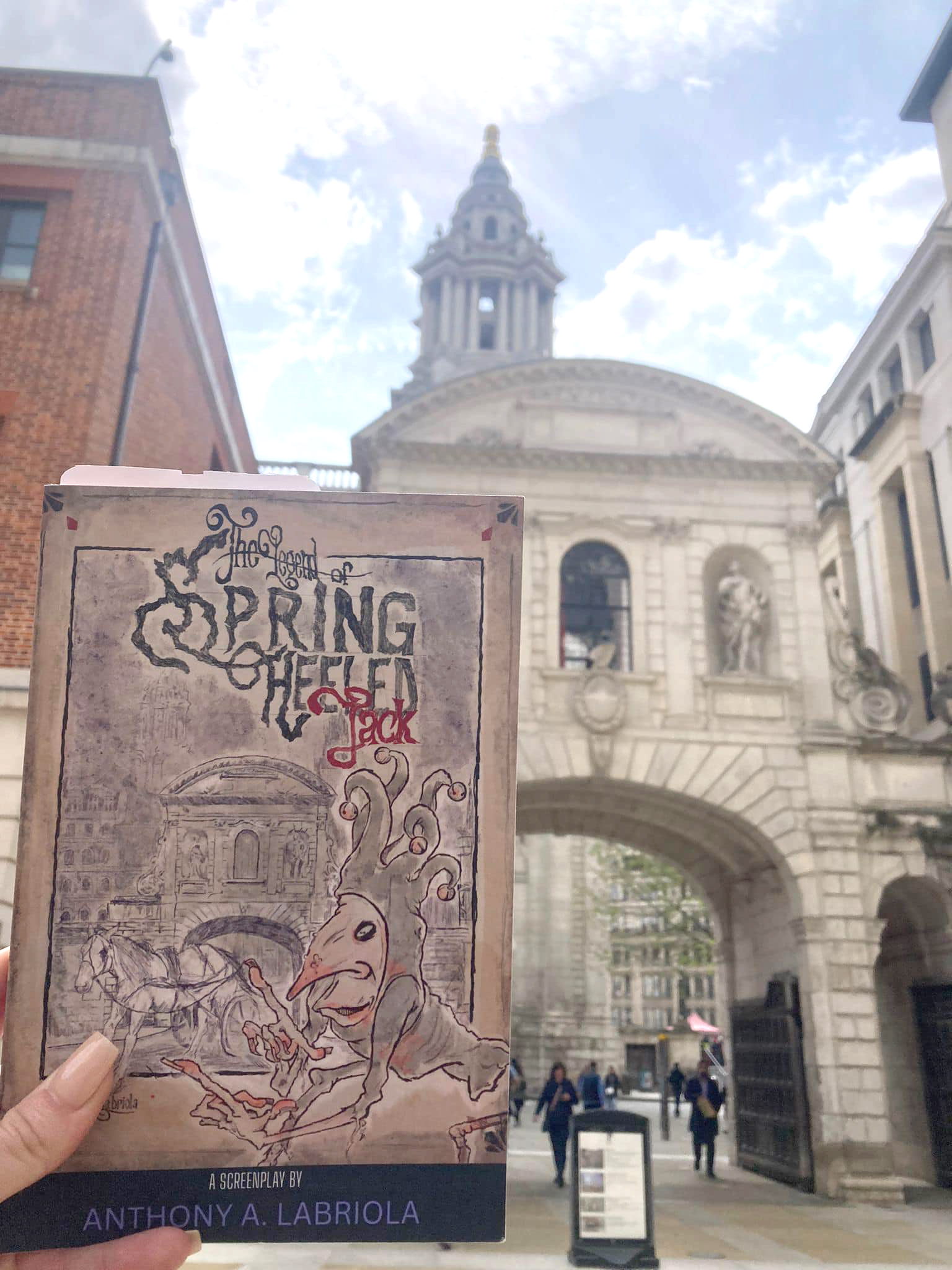
My screenplay The Legend of Spring-Heeled Jack is currently available on Amazon:
https://www.amazon.com/Legend-Spring-Heeled-Jack/dp/B0C481QQW8
Thanks for taking the time to read this and follow along my journey—the love and support is more appreciated than you know!


Leave a Reply