
Swedish filmmaker Dan Asenlund has built a unique cinematic voice shaped by travel, atmosphere, and a fascination with the unknown. Born in Sweden, he moved to the United States to pursue degrees in Journalism and Japanese at the University of Oregon before continuing his journey through Japan and Korea, where he spent six years working in film and television. His short film Four Degrees of Jonas Rydell became an official selection at both the BiFan and Yubari International Fantastic Film Festival, while his award-winning mid-length thriller Cassandra Insköld’s Last Word established him as a filmmaker deeply interested in mood, mystery, and psychological tension.
Now back in Sweden, Asenlund continues to expand his cinematic universe through ambitious independent productions. His latest creative adventure led him to Berlin, where he set out to create three short films with almost no budget, relying entirely on instinct, collaboration, and the unpredictable energy of the city itself. In this interview with Sinister Magazine, Dan reflects on the inspirations behind Kafka of Kreuzberg, filming in abandoned Cold War locations, the influence of Possession, and his passion for exploring horror across different cultural landscapes.
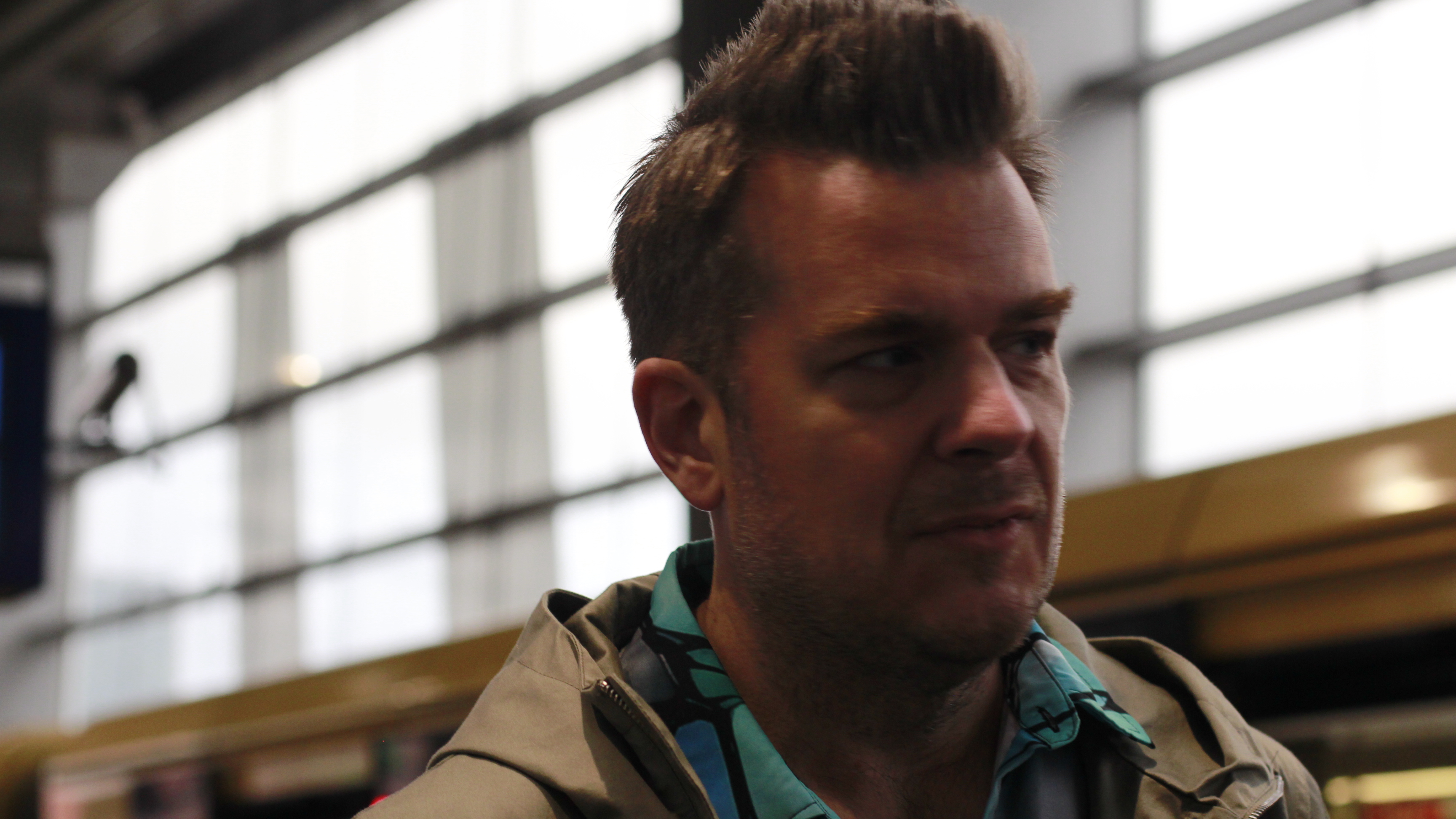
Writer and director Dan Asenlund in Berlin. Photo credit: Anna Britvina
After Cassandra Insköld’s Last Word, you embarked on an ambitious creative journey to Berlin with the goal of shooting three short films with almost no budget and without knowing anyone in the city. What motivated you to take on such a bold experiment, and what were your expectations before arriving?
Cassandra Insköld’s Last Word was a passion project of mine, a dark love letter to 1920s Stockholm, as I like to call it, and it consumed most of my energy and savings over a period of two years. I needed a sort of reset in my filmmaking journey and was attracted by the idea of doing exactly the opposite of Cassandra with its 35-minute runtime. Something much shorter, on a shoestring budget and away from Sweden. I settled on Berlin as it’s a city I had always wanted to properly explore, with its fascinating history and vibrant creative community. I also knew living costs there are much lower than in Stockholm, so while working remotely on my day job, I thought I’d give Berlin a shot. With not just one but three films, in three different genres and visual styles. Challenge accepted, the adventure could begin.
Building a film project from scratch in a completely new environment can be both exhilarating and daunting. How did you begin connecting with collaborators in Berlin, and what role did the local creative community play in bringing these films to life?
This is a funny story. While I had written script drafts of the three films, all related to Berlin in one way or another (a 15-minute Kafkaesque horror mystery, a 5-minute magical realism piece featuring the conjured ghost of 1977 David Bowie, and a 15-minute drama celebrating hedonistic Berlin), I had no idea how to begin or set things in motion as I didn’t know anyone in the city. But I’ve always believed in the law of attraction and knew that somehow it would work out.
I didn’t have to wait long, as already on my second weekend, while soaking in an outdoor public bath, I met the person who would become the producer of the films, Dorothea Tomsits. Overhearing her and her friend passionately discussing David Lynch, my favorite director, I of course chimed in. By the end of the evening, Dorothea — who works mainly as a fashion designer with her Hedone brand but has also been a costume designer for films and music videos — not only offered support but wholeheartedly dove into the realization of my crazy project.
I can now safely say that it would never have materialized the way it did without her, as she introduced me to her vast network of creative friends and also impressively managed the whole project on a shoestring budget, despite it being her first shot at film producing. To fill up the crew and find the right actors, I utilized German casting websites and the extremely vibrant Berlin Facebook communities of filmmakers and creators.
And as for the amazing composer duo for the Kafkaesque mystery, Liquid Chair & Ickle, I saw their previously scored film screen at a Berlin festival where they were present, told them about my project, and said I’d love to work with them. They agreed almost on the spot!
One of the films from this project, Kafka of Kreuzberg, is described as a Kafkaesque mystery thriller with elements of time-loop horror. What initially inspired this concept, and how does the influence of Kafka shape the narrative or thematic structure of the film?
Franz Kafka is my favorite author, and back in 2019 I spent a month in Prague walking in his footsteps. I’ve even named my cat Kafka! Kafka the writer famously spent his last year in Berlin before his health deteriorated. Kafka of Kreuzbergtoys with the idea that part of him still remains there, in a very different shape.
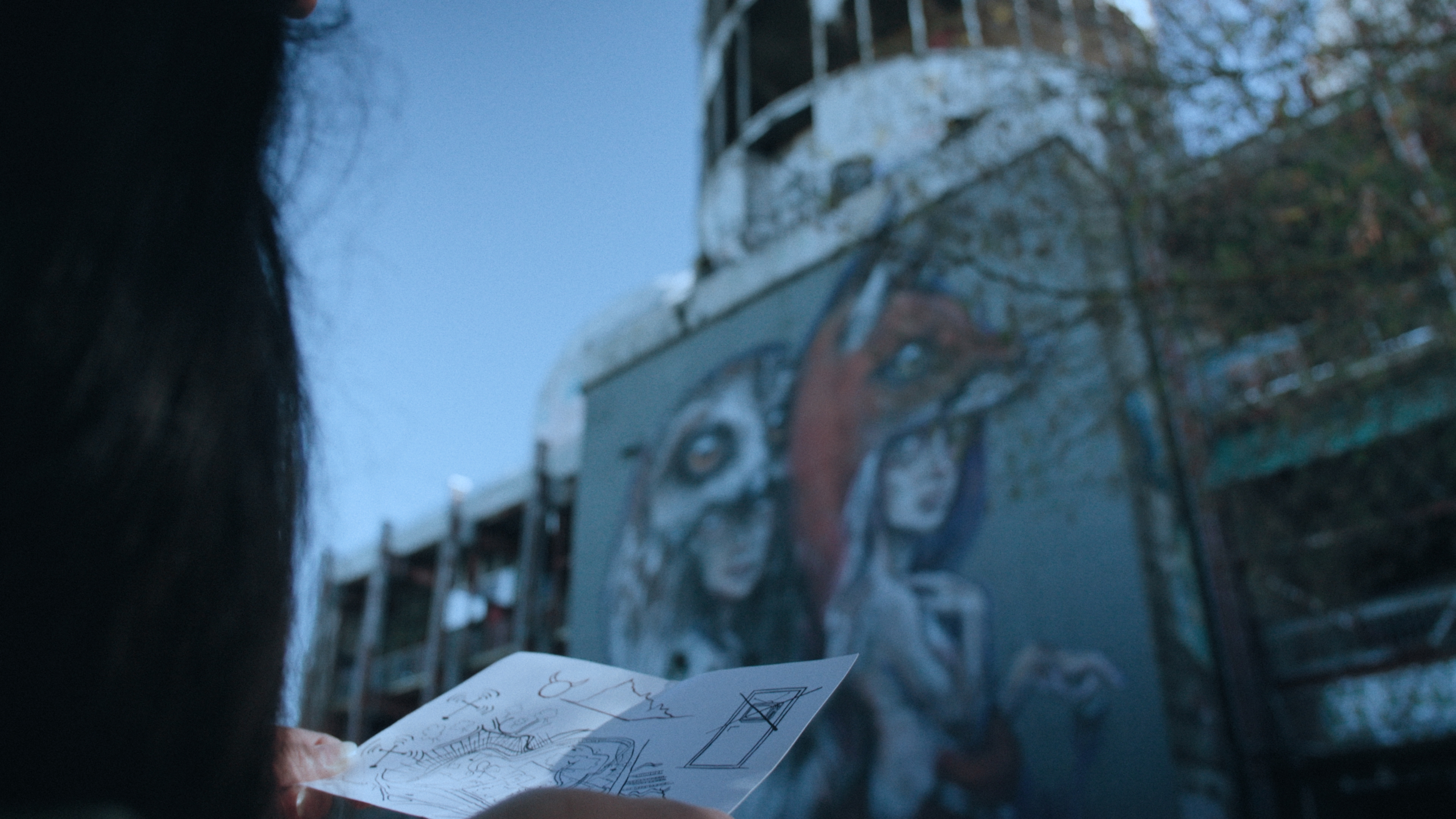
Still from Kafka of Kreuzberg (radar station). Photo credit: Blistering Barnacles Productions
This version of Kafka, which might or might not be him, has been playing riddles with curious flâneurs in the Kreuzberg district for decades, from a control room lost in time and space. The further they play along, the likelier they are to get permanently stuck. I wanted to make a film that evokes the full spectrum of feelings that Kafka’s fictional characters wrestle with, culminating in them feeling trapped and powerless.
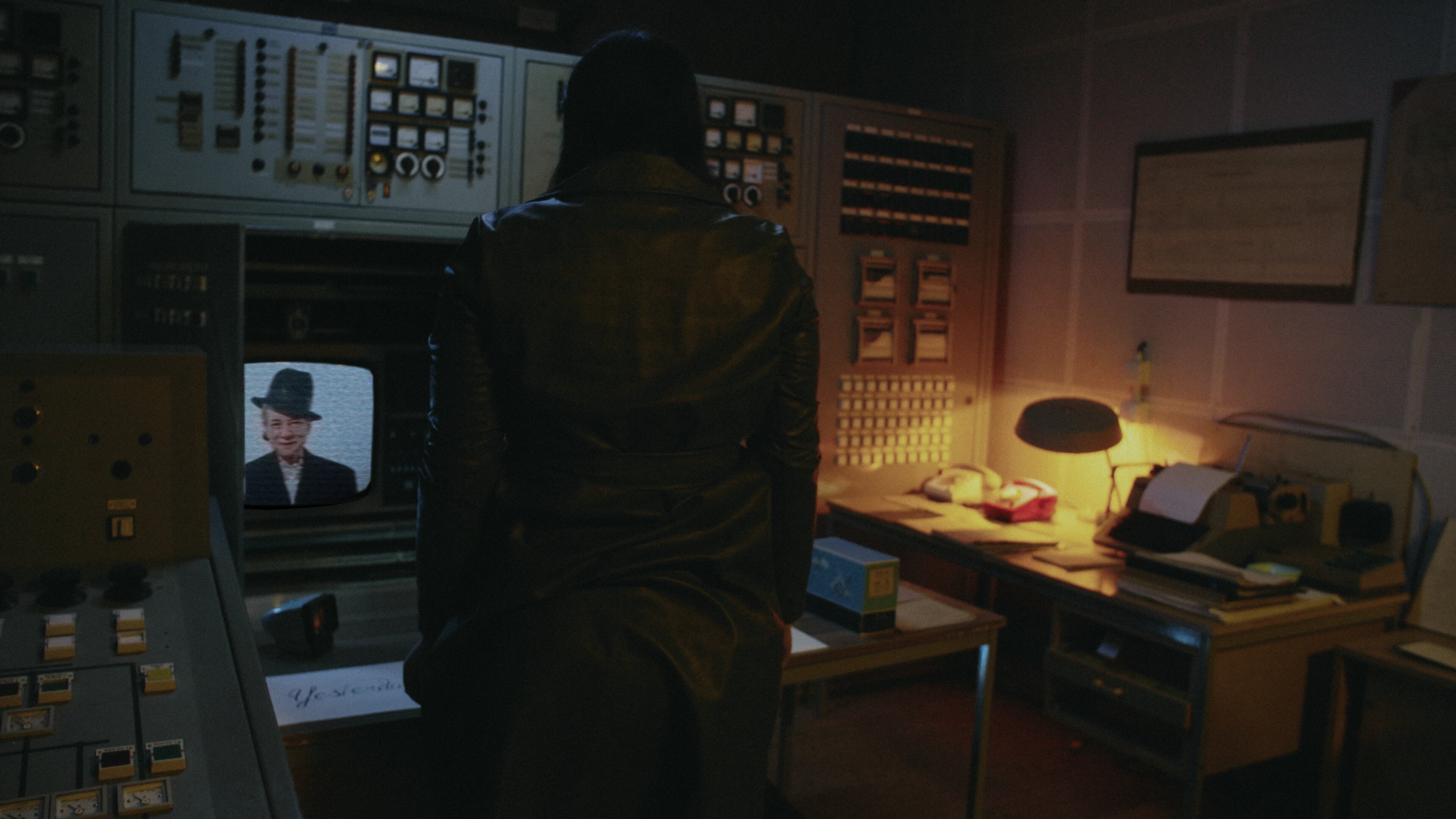
Still from Kafka of Kreuzberg (bunker control room). Photo credit: Blistering Barnacles Productions
You mentioned filming in remarkable locations, including an abandoned Cold War radio station and a preserved bunker from the former DDR. What was it like shooting in these spaces, and how did their atmosphere influence the visual tone and storytelling of the film?
It was such a blast! The Cold War radio station, on top of a mountain built from World War II rubble, is now a gigantic urban art gallery that I visited not long after chiming in on that Lynch conversation in the pool with Dorothea. Interestingly, before it became an art gallery, David Lynch wanted to buy the whole complex and turn it into a university. The moment I saw it, I knew I wanted to film there.
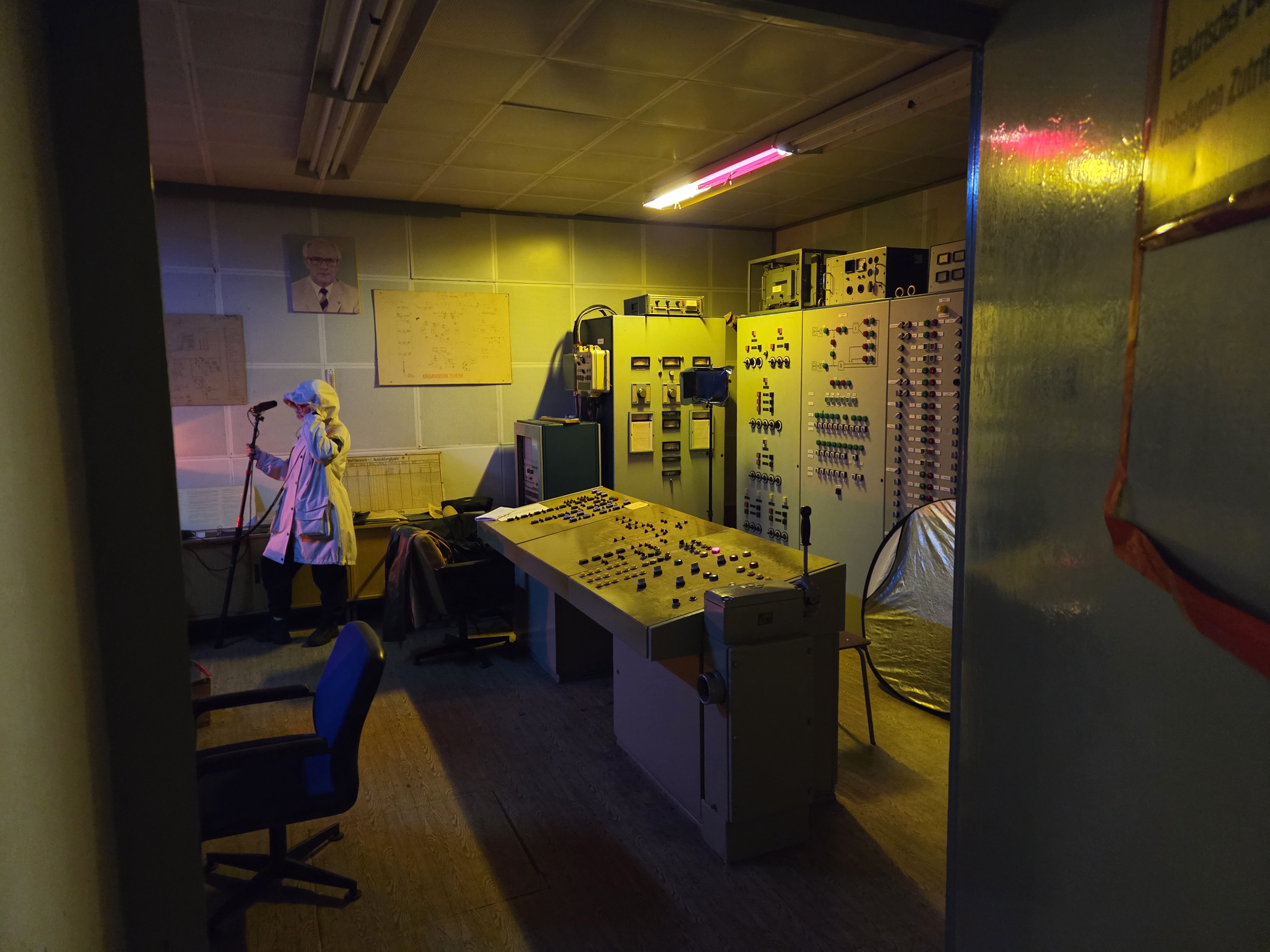
Sound recordist Daryna Axxi Degtiarova at the Garzau bunker shooting location. Photo credit: Dan Asenlund
As for the control room scenes, I knew we needed an actual bunker, and Atombunker Garzau (which I found after a lucky search online) in former East Germany ticked all the boxes. Still in great condition after its use during the Cold War, it conveyed exactly the timeless feel I was after. The caretaker was incredibly supportive from the get-go and let us shoot there for the very generous price of a private tour.
I think I’m speaking for the entire crew when I say that the half-day spent filming there was the highlight of the production.
Producing independent horror films with extremely limited resources often demands creative problem-solving. What were some of the most significant challenges you faced while making these films in Berlin, and how did you and your team manage to overcome them?
We were lucky to meet incredibly generous people all along the way who believed in this project and offered their support. I think it really helped that Berlin is such an artistic hotspot, stemming all the way from the golden years of the 1920s through David Bowie and friends’ escapades in 1970s West Berlin. I am quite sure this project could never have been done anywhere else.
For example, we had a swimming pool scene in the hedonistic Berlin short where the owner let us use it for free after closing time, staying himself until the wee hours. In Kafka of Kreuzberg, I wanted to open with a bird’s-eye view over the bridge where the plot helix starts spiraling, but couldn’t afford expensive drone shots. Instead, I decided to ring the doorbells of the upper floors in the nearest high-rise, without even having access to its lobby.
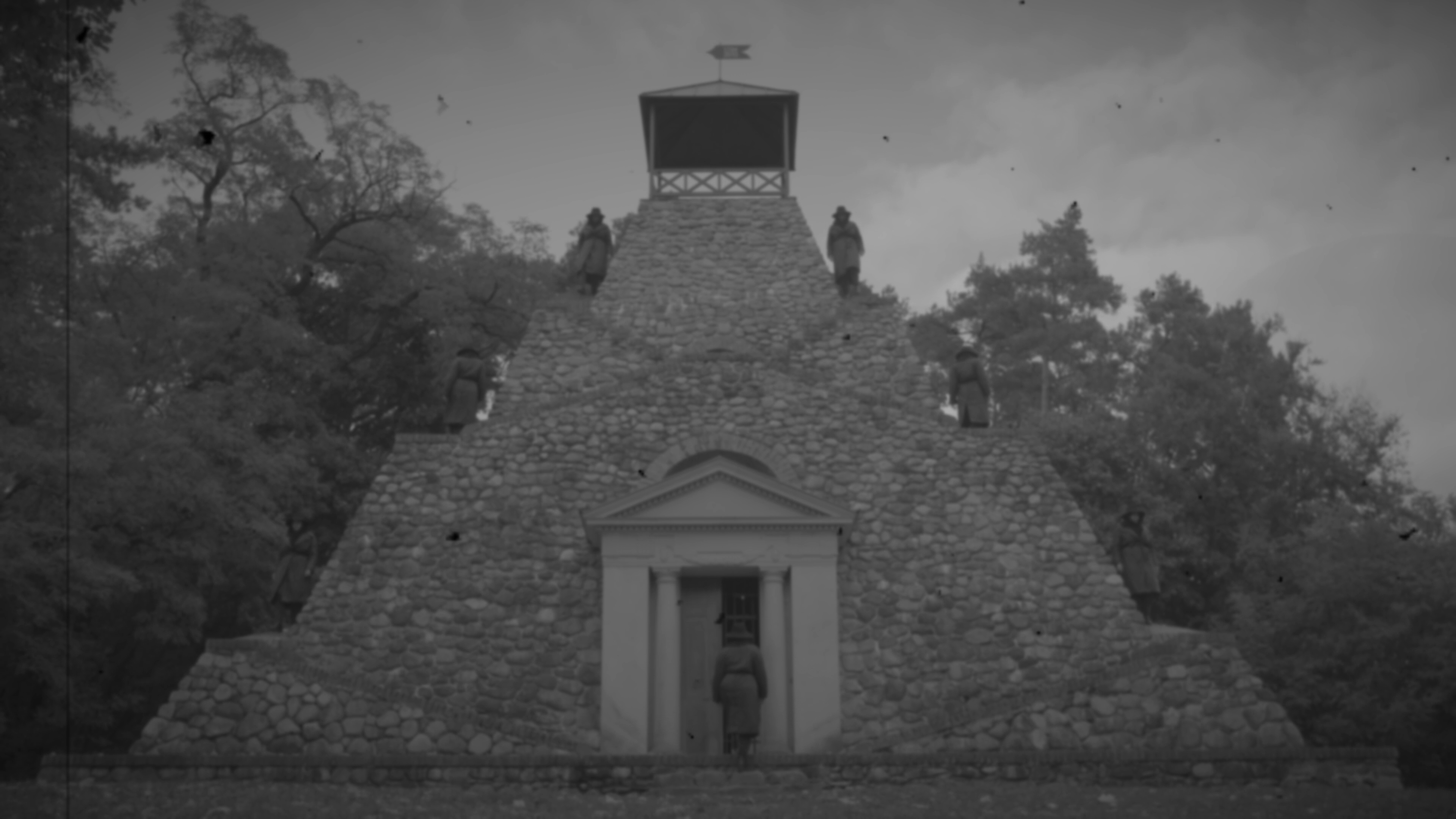
Still from Kafka of Kreuzberg (pyramid). Photo credit: Blistering Barnacles Productions
By pure chance, an elderly woman — who actually turned out to be a noted German film actress from the 1960s — opened the gate after I told her about our project. And the owners of both apartments where I haphazardly rang the doorbells said that we could shoot from their balconies. Again, I’m not sure this could play out this way anywhere but Berlin.
You cited Possessionas one of your favorite horror films, which is itself deeply connected to Berlin. In what ways has that film — or Berlin’s cinematic history more broadly — influenced your own approach to horror storytelling?
I think its breathtaking history makes Berlin ideal for horror storytelling, which is very evident in Possession, set in West Berlin at the height of the Cold War. The Berlin Wall is more than just a backdrop, and you can see actual armed East German border guards patrolling it. I love the film’s blue tint, emphasizing the chills on so many levels. I was greatly inspired by it when creating the look of Kafka of Kreuzberg.
Although I prefer Dario Argento’s original, I like how Luca Guadagnino’s remake of Suspiria also tries to capture the atmosphere of late 1970s Berlin, hugging the wall in many shots. Only here it was just a set, as opposed to Possession.
Finally, you mentioned that your next project is a feature currently in the pitching phase set in rural Japan. Looking ahead, what draws you to exploring horror stories across different cultural landscapes, and how do you think these environments shape the type of horror you want to create?
I think exploring the unknown is the root of all horror, although in my case Japan is far from untrodden ground as I’ve lived there for years in the past. I’m a huge admirer of J-horror films by Kiyoshi Kurosawa, Shinya Tsukamoto, and others, and it has always been my dream to make a feature there.
My co-writer Gabriel Caprav and I chose the stunning volcanically altered landscapes in the Bandai region in northern Japan as the ideal setting for The Secret of the Five Colored Lakes, a mystery thriller with supernatural elements.
Epilogue
With projects that move effortlessly between psychological horror, historical atmosphere, and surreal mystery, Dan Asenlund continues to prove that compelling genre cinema does not depend on massive budgets, but on vision, persistence, and imagination. From abandoned bunkers in Berlin to the haunting volcanic landscapes of rural Japan, his stories explore fear through places deeply shaped by history and culture.
To stay updated on Dan Asenlund’s upcoming films and future festival screenings, follow his work as he continues pushing the boundaries of independent horror storytelling around the world.
© 2026 Sinister Magazine. All Rights Reserved.


Leave a Reply